
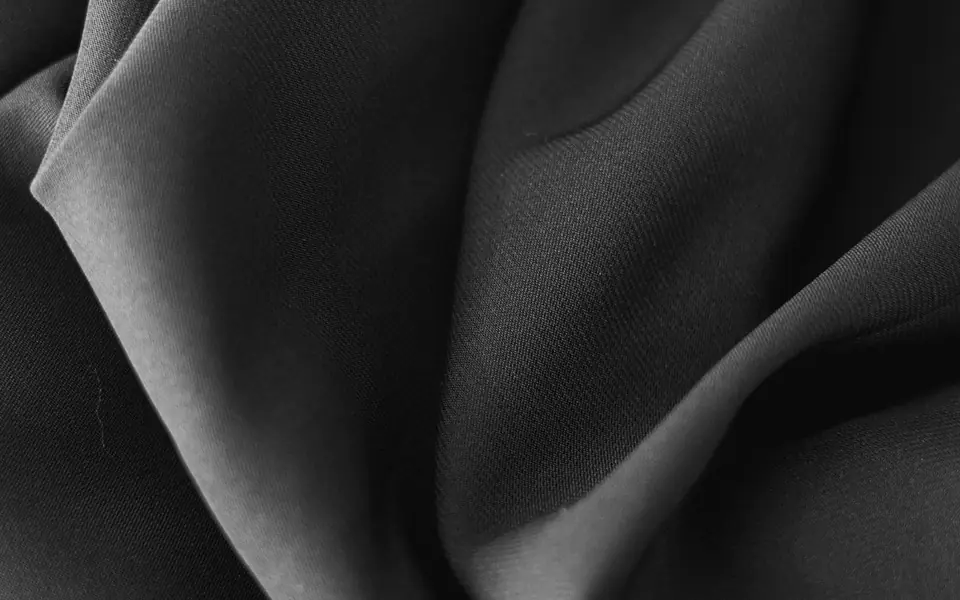
( 04 ) · fabric
Wholesale crepe abayas
Crepe holds its shape, takes a pleat and comes out of a suitcase wearable. It is the cloth to stock for customers who travel and for any cut that needs structure. From AED 90 a piece, 20 pieces in any mix.
In short
Crepe is a weave, not a fibre: yarns are twisted tightly before weaving, which gives the cloth its fine pebbled surface. Most abaya crepe is polyester. It holds its shape better than nida, resists creasing well enough for travel, and suits pleated or structured cuts. Names like Korean crepe and moss crepe are seller labels, not fixed specifications.
- Weave
- High-twist yarn, pebbled face
- Weight
- 120–220 GSM, printed per style
- Minimum
- 20 pieces, any mix
- Price from
- AED 90 a piece
Crepe styles are cut to order
Tell us the cut and the colours and we will quote it, or ask for the line sheet with the crepe grades we are running now.
Prices and terms reviewed September 2026
Why buyers pick crepe
Comes out of a suitcase wearable
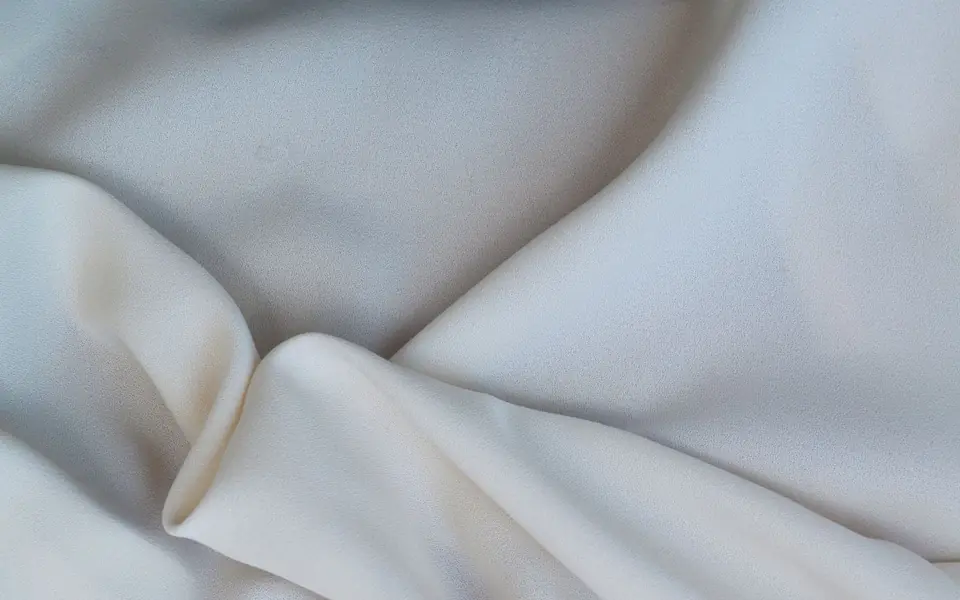
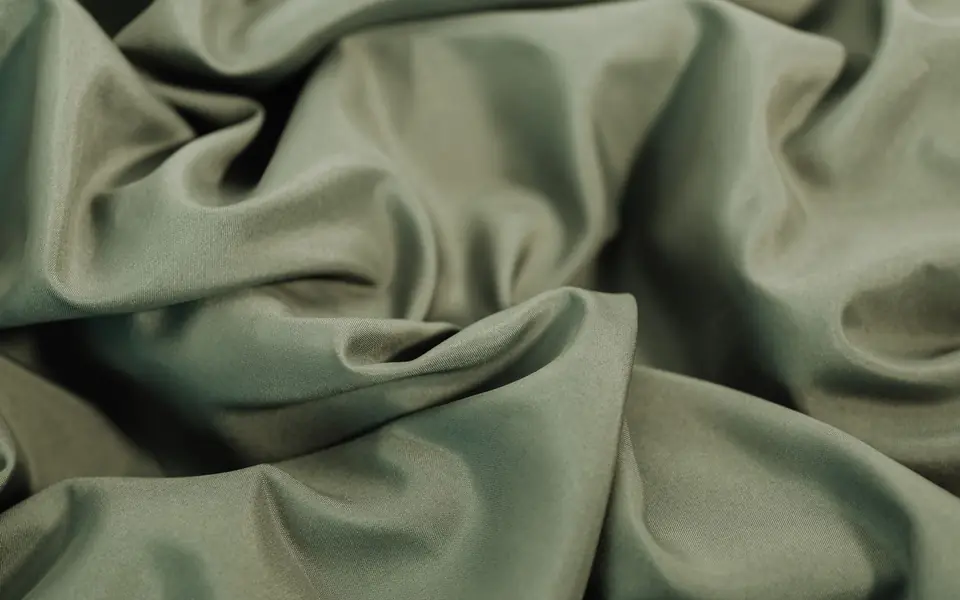
The high-twist weave springs back from folding. For travel, Umrah and any customer who lives out of a bag, that is the whole argument.
Holds a shape
Pleats, panels and structured cuts stay where the pattern put them. Nida is softer and will not hold the same line.
A good base for handwork
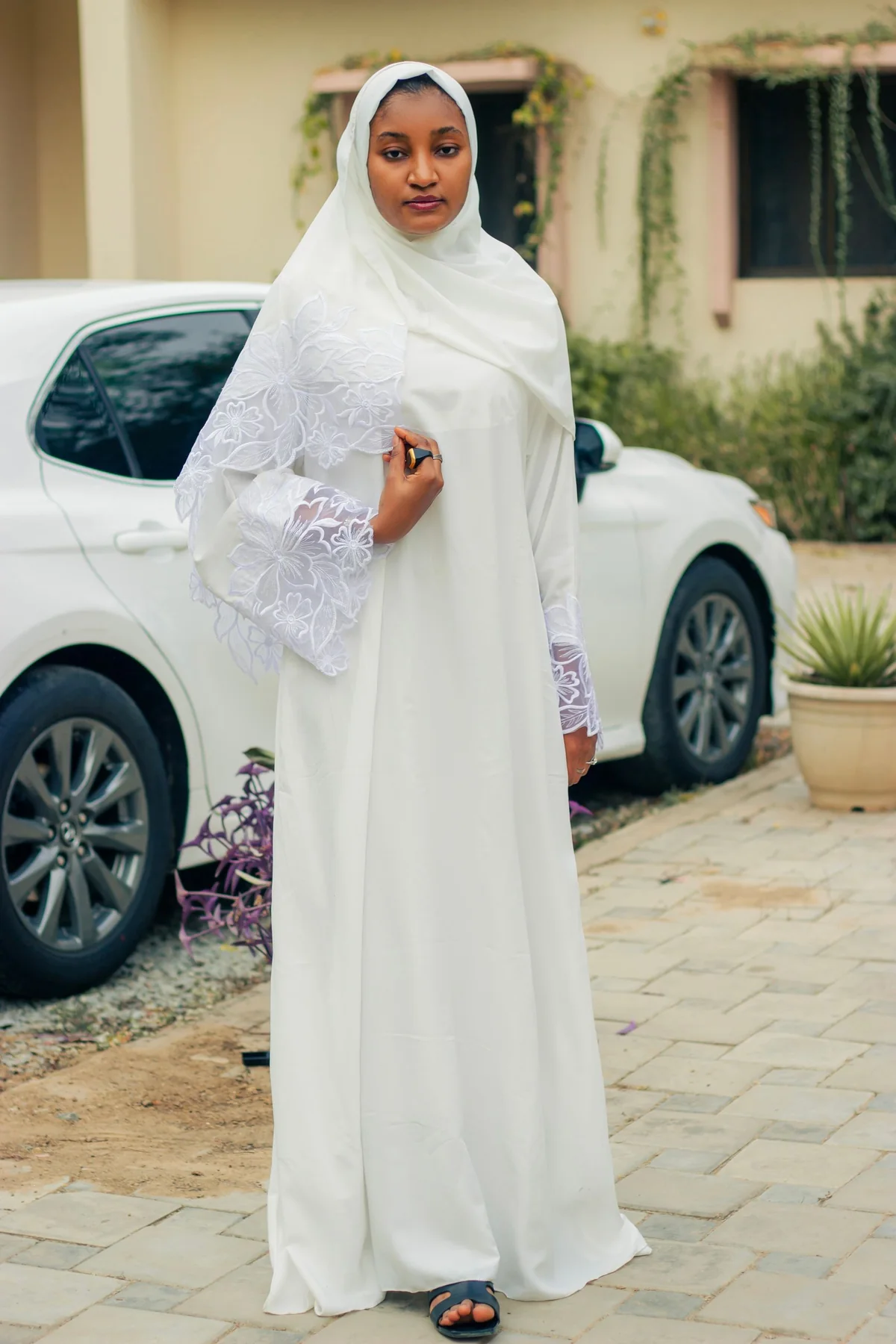
The surface takes embroidery and stonework without puckering, which is why occasion pieces so often start here.
The crepe grades we use
Crepe is a family, not one cloth. These are the grades we work with and what each one is for.
| Grade | Weight | Finish | Best for |
|---|---|---|---|
| Crepe | 120–220 GSM | Matte, grainy | Everyday structure, workwear, travel |
| Moss crepe | 75–175 GSM | Matte, soft texture | A heavier hand with more grain |
| Satin crepe | About 150 GSM | Satin face, matte back | Occasion cuts wanting a sheen on one face |
| Barbie crepe | Not usually published | Matte | Softer drape where sellers publish no weight |
Trade names in this family move around between mills. Where a grade has no published weight we say so rather than invent one, and the product page carries the measured figure for the cloth we actually used.
What crepe fabric is
Crepe describes how the cloth is made, not what it is made from. The yarn is twisted hard before weaving, and that twist gives the finished fabric its fine, slightly pebbled face.
Most crepe used for abayas is polyester. You will also find viscose and silk crepes at higher prices, and the hand is noticeably different.
Crepe or nida
Nida is smoother and softer and falls closer to the body. Crepe has texture, more body, and stands slightly away from the figure.
A customer who wants an abaya that looks pressed at the end of a long day wants crepe. A customer who wants the softest possible everyday piece wants nida. Most shops carry both, and the pair covers nearly every request.
Korean crepe, moss crepe, anti-crepe: what the names mean
Very little, on their own. These are seller labels rather than standards, and two mills can use the same word for different cloth.
Treat the name as a starting point and the weight and the swatch as the decision. If a supplier cannot give you a weight for the grade they are quoting, you do not yet know what you are buying.
Buying crepe for your shop
Crepe sits a step above nida in price and a step above it in perceived quality, which makes it the natural second fabric in a range.
Where crepe earns its price
Put crepe behind the styles where structure is the point: pleated fronts, panelled cuts, anything tailored, and anything you intend to embroider.
Do not pay for crepe on a simple everyday piece where a good nida would do the same job for less. Your margin is made by matching the cloth to the cut.
Care your customers need to know
Crepe is more delicate in the wash than nida. Cool water, a gentle cycle and a mesh bag protect the surface, and a medium iron with light steam on the reverse keeps the texture.
Say this on your product pages. Most crepe complaints are washing accidents, not fabric faults.
Questions buyers ask
What is crepe fabric?
A fabric made by twisting yarns tightly before weaving, which gives it a fine pebbled surface and more body than a flat weave. Most abaya crepe is polyester.
What is the difference between crepe and nida abayas?
Nida is smoother, softer and falls closer to the body. Crepe has texture, holds its shape and resists creasing better, so it suits travel and structured cuts.
Is a crepe abaya good for hot weather?
It is polyester, so it breathes less than linen or cotton. Lighter crepe is comfortable in heat, but for very hot markets look at linen alongside it.
Does crepe wrinkle?
Far less than cotton or linen. That crease resistance is the main reason buyers choose it for travel ranges.
What GSM is crepe?
The crepe we use runs about 120–220 GSM, and every product page carries the measured figure for that style. Ranges vary a lot between mills, so the number matters more than the name.
Is crepe stretchy?
Plain crepe has a little natural give from the twisted yarn but is not a stretch fabric. Where a style needs stretch we add elastane and the product page says so.
What is anti-crepe?
A seller label for a smoother, flatter crepe with less visible grain. It is not a standard, so ask for the weight and a swatch rather than relying on the word.
What is moss crepe?
A heavier crepe with a more pronounced, mossy grain and more body. It suits structured cuts and cooler seasons.
What is Korean crepe?
Another grade name rather than an origin. Judge it by hand and weight, and ask where the cloth was actually woven if that matters to your customers.
Is crepe good for embroidery?
Yes. The surface supports stitching and stonework without puckering, which is why occasion pieces are so often cut in crepe.
Is crepe good for pleated or structured abayas?
It is the better choice. Crepe holds a pleat and a panel line where a softer nida would relax out of it.
How do you wash a crepe abaya?
Cool water on a gentle cycle, ideally in a mesh bag. Iron on medium with light steam on the reverse side, following the grain.
Do you send fabric swatches before a bulk order?
Yes. Hangers of the grades you are considering, so you can compare them by hand. No photograph tells you what a crepe feels like.
What is the minimum order for crepe abayas?
20 pieces across the whole order, any mix of styles, colours and sizes, with a AED 2,000 minimum order value.
Can I get crepe abayas with my own label?
Yes, on any style. Woven, printed or heat-seal labels with your care tags and packaging.
How fast can you ship crepe abayas?
Made to order takes 12 to 18 working days. Ready stock, where we hold it, leaves in 3 to 5. Courier transit is on top.
Buyers also look at
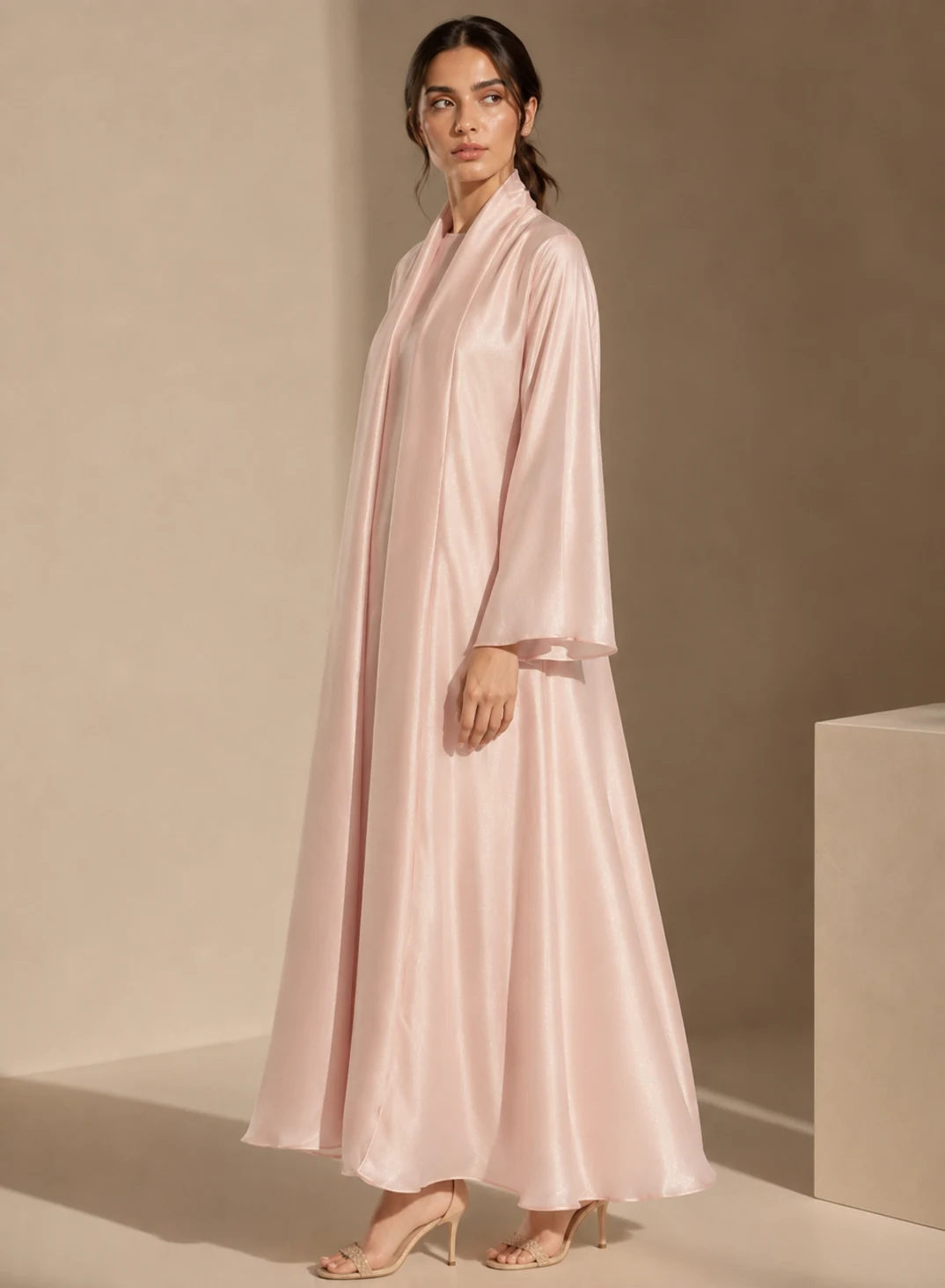
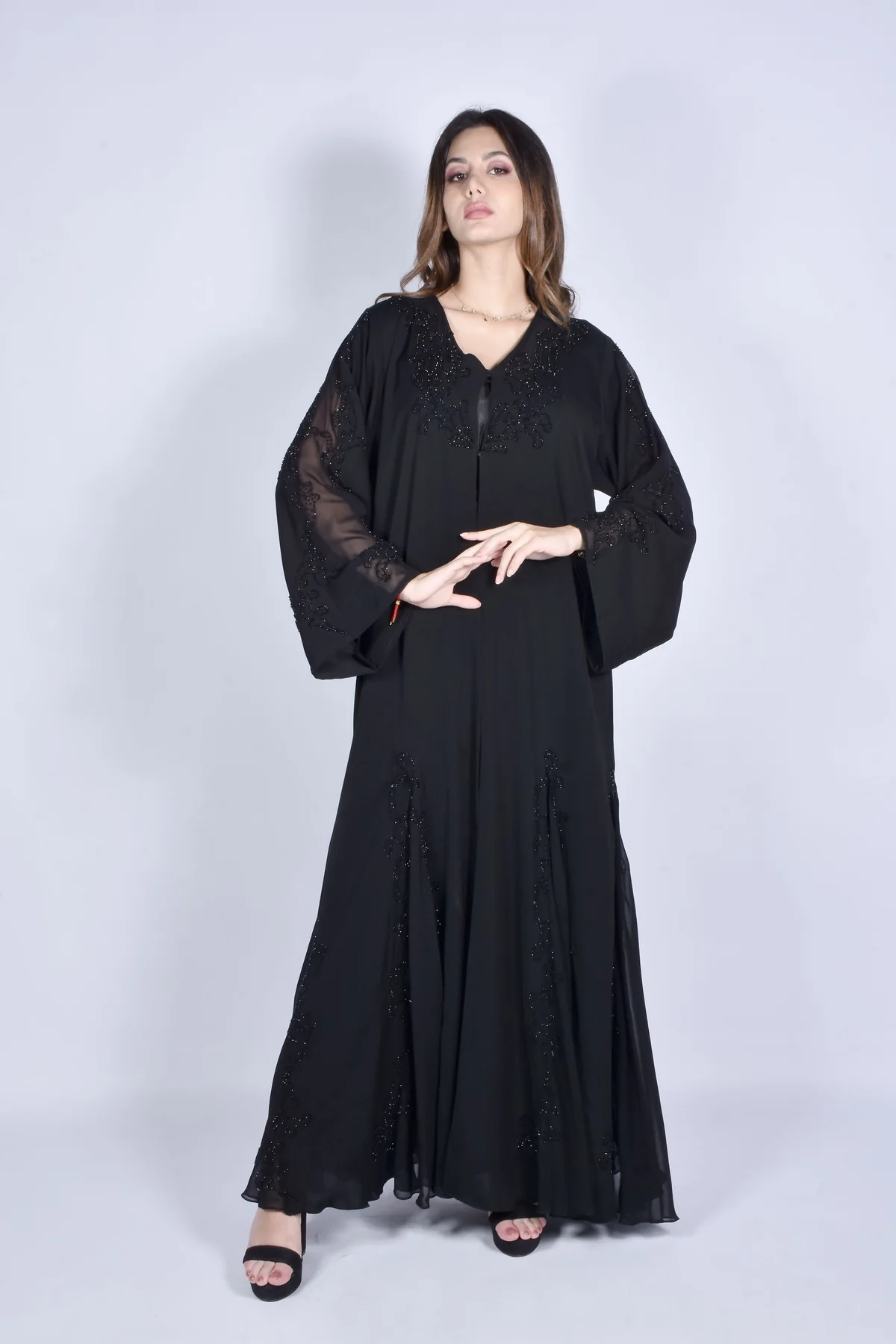
The rest of the range
- 01NidaThe everyday fabric
- 02Open abayaBest seller in the US, UK and EU
- 03Kimono abayaHighest-searched silhouette
- 04CrepeTravels without creasing
- 05Plus sizeGraded from a plus block
- 06EmbroideredYour artwork, made to spec
- 07Closed abayaFull coverage cuts
- 08Butterfly and batwingPhotographs well
- 09FarashaFor Ramadan and occasions
- 10LinenFor hot climates
- 11LuxuryLined and hand-finished
- 12Prayer dressOne-piece and two-piece
- 13Umrah and HajjWrinkle-resistant travel sets
- 14KidsMother and daughter sets
- 15HijabsMatched dye lots