Landed cost up front
Goods, freight and duty as one figure for your address, before you pay a deposit.

Door to door in 40+ countries, with freight and duty quoted before you pay a deposit. The bill that catches importers out is the one we show you first.
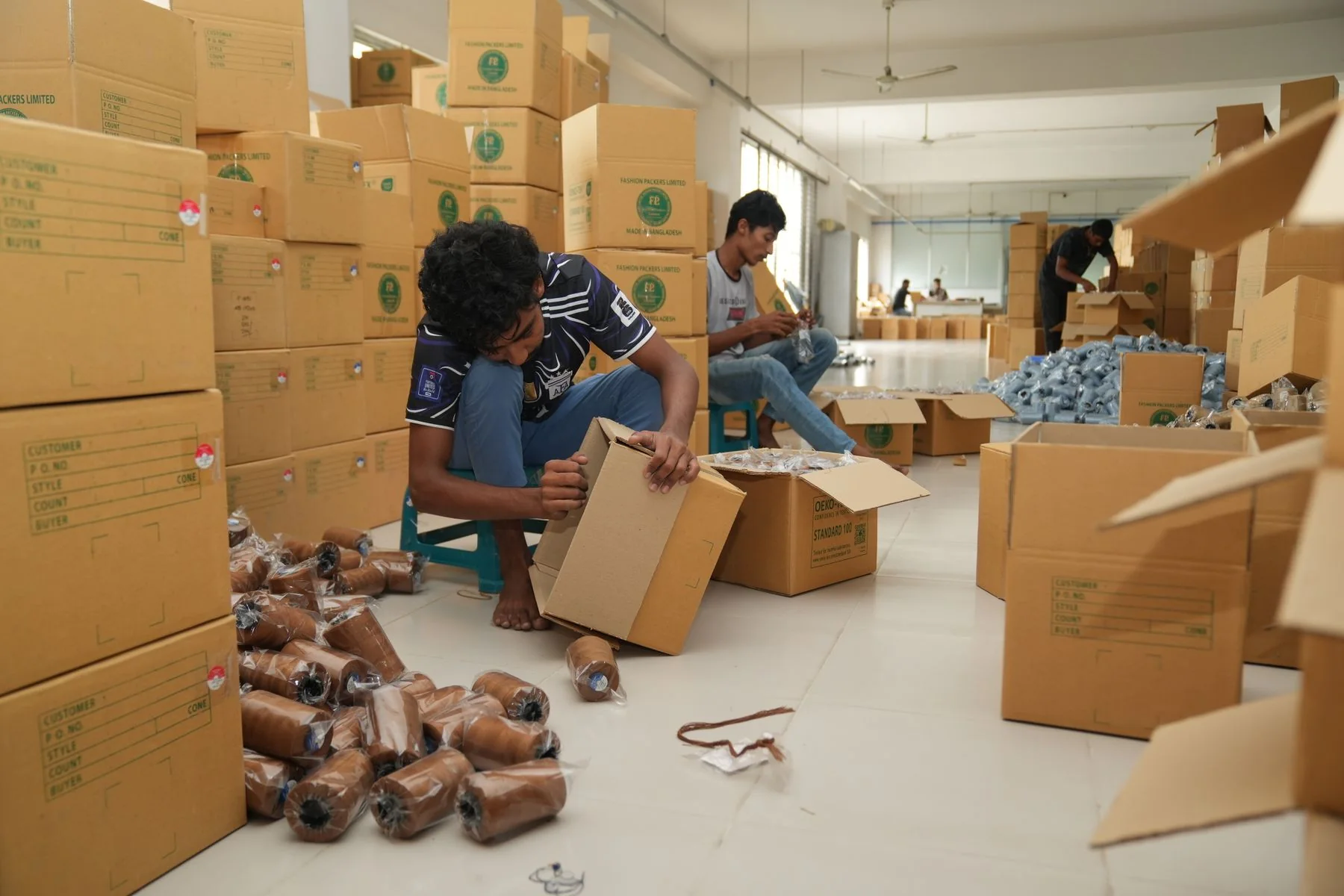
Door to door, not port to port.
On top of production lead time.
DDP with duty paid, or DAP with duty on you.
Duty is estimated up front, not discovered at the door.
A good wholesale price turns into a bad one on the way to your warehouse. The piece price is the part suppliers put on the website. The rest of it decides whether you actually made any money.
Landed cost is the whole thing: goods, freight, duty, tax and clearance, divided by the number of pieces. That is the number to put next to your retail price, and it is the number we quote.
Five parts, and buyers routinely forget three of them.
Ex-works means the price covers the goods sitting in our building and nothing else. Every step after that is yours to arrange and pay for: export clearance, transport, import clearance, duty and delivery.
It is a perfectly normal way to trade if you have a freight forwarder and do this every month. If you do not, an ex-works quote is a number that cannot be compared with anything, and it is where first-time importers lose their margin.
This is the single most common shipping question we get, and the answer decides who does the paperwork and who carries the risk.
We quote both, side by side, so you can see the real difference rather than guessing.
Both deliver to your door. The difference is who deals with customs.
We handle export, freight, import clearance and the duty. You get one delivered price and a parcel at your door with nothing left to pay. Simplest if you have never imported before. Note that DDP usually covers duty but not always local sales tax or VAT, so check what is included, on our quote and on anyone else’s.
We deliver to your address, you or your broker handle import clearance and pay the duty and tax. Cheaper if you already import and have your own rates, and it puts you in control of how your goods are classified.
First import, no broker, no customs experience: take DDP. The premium is worth not having your first shipment sitting in a bonded warehouse while you work out what an EORI number is.
Regular importer with a broker: take DAP. You will almost certainly beat our clearance cost, and you keep control of the classification, which as the next section explains is worth real money.
Either way, ask for both numbers. Sometimes ours is cheaper and sometimes yours is, and you cannot know without comparing.
Almost nobody in this trade explains this, and it is worth more to you than any freight discount.
Customs does not have a code for "abaya". It has codes for dresses, for other garments, and for overcoats and cloaks. The same physical abaya can reasonably land in more than one of them depending on how it is cut and described, and the rates are not the same.
These are the ones that matter for what we make.
Women’s dresses, suits and ensembles. A closed-front abaya that reads as a dress often sits here, under 6204.43 for synthetic fibres.
The catch-all for garments that do not match a named heading. Plenty of abayas end up here, under 6211.43 for women’s garments of man-made fibres.
An open-front abaya worn over other clothes can be argued into this heading. That argument can be expensive, as the next part shows.
Checked against the US tariff schedule in September 2026: a polyester abaya classified as a dress under 6204.43.40, or as an other garment under 6211.43.10, carries 16 per cent duty. The same garment classified as an overcoat or cloak under 6202.40.20 carries 27.7 per cent.
That is nearly twelve points of margin on one physical product, decided by a line on a customs form. On a shipment of five hundred abayas it is a serious number.
One caution: those are the base rates. The United States layers additional tariff measures on top which change often, so treat sixteen per cent as the floor rather than the total and check the current position at the time you ship.
We describe your goods accurately and consistently, and we use the same classification on every shipment so your import history does not look erratic to your customs authority.
If you import regularly and the classification is genuinely arguable, it is worth applying for a binding ruling from your own customs authority. It is free or cheap in most countries, it takes a few weeks, and it turns an argument into a decision you can rely on. Send us the garment details and we will give you what you need for the application.
What we will not do is describe your goods as something they are not in order to lower the rate. That is your risk at the border, not ours, and it is not worth what it saves.
Checked against the UK Integrated Online Tariff and the US tariff schedule in September 2026. Rates and thresholds change, so we confirm yours at quoting rather than expecting you to trust a web page.
Twelve per cent duty on woven and knitted garments in the headings abayas normally fall under, plus twenty per cent import VAT.
The VAT is charged on goods plus freight plus duty, not on the goods alone, which is the part people forget when they model it. You will need an EORI number to import commercially, which is free and takes a few minutes to get.
Twelve per cent duty across the dress heading regardless of the material, plus VAT at your own country’s rate.
EU rules on low value consignments have been changing, so if you are importing small parcels rather than pallets, check the current position before you plan around a threshold.
Sixteen per cent as a dress or an other garment, 27.7 per cent as an overcoat or cloak, as the classification section above explains. There is no federal VAT at the border.
Additional tariff measures stack on top of those base rates and change frequently. Anyone quoting you a single all-in US duty figure without checking the current stack is guessing.
We quote duty per destination at the time you enquire rather than publishing a table that goes stale. Gulf, Australian, South African and South East Asian rates all have their own quirks and thresholds.
Tell us the country and we will come back with the rate we are working to and where we got it.
Most buyers assume this is a cost decision. It is mostly a timing decision, and the right answer is often both.
Couriers and airlines charge on chargeable weight, which is the greater of actual weight and volumetric weight. Volumetric weight is worked out from the size of the carton.
Clothing is light and takes up space, so garments almost always price on volume rather than weight. This is why loosely packed cartons cost real money and why we compress and pack tightly as standard.
Courier is fastest, usually 5 to 10 working days door to door, and it makes sense up to a few hundred pieces or whenever the stock is already late.
Sea is much cheaper per piece and is measured in weeks rather than days. It only works if you planned ahead, and it is the right default for a repeat volume order.
Splitting is underrated. Send a small air shipment so you can open your floor set and start selling, with the sea consignment following behind. You get the cash flow of arriving early and most of the saving of sea.
Shipments get held, cartons get dropped, and occasionally a piece count comes up short. Here is what happens, so you know before it matters.
Usually it is a paperwork question rather than a problem: a missing document, a query on the description, or a value that needs supporting.
Send us the query and we answer it directly with the broker. Holds get resolved in days when the paperwork is right to begin with, which is most of why we are careful about it.
Photograph it before you unpack it, including the outer carton and the seal, and tell us within seven days.
We hold the packing photographs for every carton, so a claim becomes a comparison of two sets of pictures rather than an argument about what was in the box. We handle the carrier claim rather than handing it back to you.
Cargo insurance is available and priced as a small percentage of the goods value. On a courier shipment of a few hundred pieces it is usually worth it, because a single lost carton costs far more than the premium.
On a first order especially, take it. It is the cheapest anxiety you will ever buy.
Freight is where a good wholesale price quietly becomes a bad one, so we quote it as part of the deal rather than as an afterthought.
Goods, freight and duty as one figure for your address, before you pay a deposit.
We clear and pay duty and hand you a delivered price, or your own broker does it. Both quoted so you can compare.
Commercial invoice, packing list, carton manifest and a certificate of origin where your customs authority wants one.
Each carton photographed packed and sealed, with a list of what is inside, sent before dispatch.
Airway bill or bill of lading the day it ships, not a week later when you chase.
Damage or shortage goes to the carrier through us, with our packing photographs as the evidence.
Five steps between the last stitch and your stockroom.
Destination city, carton count and volume give a freight figure and a duty estimate for your classification.
Courier for speed, air freight for mid volume, sea for planned bulk. You see cost and days for each.
Cartons packed to weight limits, labelled, photographed and listed. Paperwork raised in your consignee details.
Handed to the carrier, tracking sent the same day, balance invoiced against the carton photographs.
We clear on DDP, or hand your broker the documents on DAP. Delivered to your door and signed for.
The essentials. The full policy lives on the landed cost page.
The handover points where goods usually go missing or get damaged.


Freight is a rounding error for some buyers and the whole margin for others.
You have never cleared customs and do not know what duty on clothing is in your country. Take DDP for the first one and learn on the second.
You already import. Take DAP, use your rates, keep control of the classification, and use our paperwork, which is raised properly.
One production run, several destinations. We split, document and ship each leg from one consignment.
Of the abaya suppliers we looked at, almost none mention customs at all beyond "we ship worldwide".
Not after arrival. An unexpected duty bill is the most common reason a first import loses money.
DDP and DAP side by side. Sometimes yours is cheaper and we will say so.
Because the difference between two defensible codes can be twelve points of duty, and nobody else in this category tells you that.
Correct codes, real values and a packing list that matches the cartons. Undervalued invoices are somebody else’s problem to be caught with.
Photographs and manifests at packing and sealing, so a claim is a matter of fact rather than argument.
Four details and you get a landed number instead of a range.
City, country and postcode. A country on its own gets you a guess, not a quote.
It changes the courier rate and sometimes the clearance route.
Whether you want duty handled by us or by your own broker.
It decides whether sea freight is even an option for this order.
Freight and customs questions, answered with numbers where numbers exist.
It depends on destination, carton count and mode, and we quote it with the goods. Send us a city and a quantity and you get a figure, not a range.
It is shown as its own line, so you can see exactly what the goods cost and what getting them to you costs. A quote that blends the two makes comparison impossible, which is sometimes the point of it.
Carriers charge on chargeable weight, which is whichever is greater of actual weight and volumetric weight. Clothing is bulky and light, so it almost always prices on volume.
Volumetric weight. The carton is being charged for the space it occupies on the aircraft rather than what it weighs. Tighter packing is the only real fix and we do it as standard.
Carriers apply one, yes. It is the reason a very small shipment can cost nearly as much to send as a moderate one, and the reason filling a carton is worth doing.
We tell you how long a quoted rate is good for. Fuel and surcharges genuinely move. If a rate changes materially before dispatch you hear about it before we ship, not on an invoice afterwards.
No. Freight is passed through at what we are charged. We make our money on garments, and a padded shipping line is a bad way to earn a few dirhams and lose a customer.
Courier is usually 5 to 10 working days door to door. Sea is quoted per lane and measured in weeks. Both are on top of production lead time.
From dispatch. Add it to your production lead time to get the real date, which is the one worth planning against.
Our estimate assumes normal clearance. A hold for a document query adds days, which is exactly why we are careful with paperwork.
If you have the time, sea. If you are already late, air. If you are launching, split it: a small air shipment to open the floor set, sea behind it.
Yes, and for a seasonal launch it is often the smartest option. You get cash flowing on the early stock without paying air freight on the whole run.
Tell us your date and we will answer honestly. Work backwards from the shelf date through clearance, freight and production. If it does not fit we would rather say so than take the order and disappoint you.
Whoever you choose. On DDP we clear and pay it and give you a delivered price. On DAP you or your broker do. We estimate the figure either way before you commit.
Delivered duty paid. We handle export, freight, import clearance and duty, and the goods arrive with nothing left to pay. Check whether local sales tax or VAT is included, because DDP does not always cover it.
Both deliver to your door. On DDP we clear customs and pay the duty. On DAP you do. DAP is usually cheaper if you already import and have a broker.
DDP. The premium buys you not having your first shipment stuck while you work out what paperwork you are missing. Move to DAP once you have done it a couple of times.
In the UK, twelve per cent plus twenty per cent import VAT at the time of writing. In the EU, twelve per cent plus your national VAT. In the US, sixteen per cent as a base for the usual classifications, with additional measures on top that change often. We confirm the current rate for your country when we quote.
Because a US abaya classified as a dress or an other garment carries sixteen per cent while the same garment classified as an overcoat carries 27.7 per cent. On a large order that difference is real money, and almost nobody explains it to buyers.
Usually within heading 6204 for dress-style abayas or 6211 for other garments, depending on construction. We describe the goods accurately and use the same code consistently so your import history stays clean.
If you import regularly and your classification is genuinely arguable, yes. It is cheap or free in most countries, takes a few weeks, and removes the argument permanently. Ask us for the garment details you need to apply.
No. The invoice shows what you paid. Undervaluation is your risk at the border and the penalties are far worse than the duty you would save.
In the UK and EU, yes, for commercial imports. It is free and takes minutes. Other countries have their own equivalent and we will tell you what yours needs.
Commercial invoice, packing list, carton manifest, and a certificate of origin where your customs authority wants one. All in your consignee details.
On DDP, no, we handle it. On DAP, you will need one unless you are set up to clear yourself. Couriers offer brokerage as part of the service, usually at a price.
Both are the transport document. A bill of lading is used for sea freight and can be a document of title. An airway bill is used for air and is not. Practically, both are how you track and claim.
Usually it is a question rather than a problem. Send us the query and we answer it directly with the broker. Holds clear in days when the paperwork was right to begin with.
Yes, with planning. Their carton labelling and packing rules are strict and non-compliant cartons get turned away. Send us the spec at booking rather than at dispatch.
All of it. That side is our job and it is included, not an extra line.
Photograph it before opening, including the outer carton and the seal, and tell us within seven days. We hold packing photographs for every carton, so it becomes a comparison rather than an argument.
Send the carton photos and the manifest we issued. If the shortage happened here it is our problem. If it happened in transit we run the carrier claim.
On a first order, yes. It is a small percentage of goods value, and a single lost carton costs far more than the premium.
Usually not. Cargo insurance covers loss and damage, not a missed selling window. The protection against delay is ordering earlier, not paying more.
It depends on the incoterm, which is exactly why they exist. On DDP, we carry it to your door. On DAP, we carry it to your door but you carry the import formalities. We will spell out where the line sits in your quote.
More than 40, door to door. If yours is not one we ship to regularly, ask, and you will get a straight answer rather than silence.
Sanctioned destinations, and a small number of lanes where carriers will not take commercial clothing. Name your country and we will tell you immediately.
Yes. One production run can be split into several consignments, each documented separately. Tell us at quoting so freight is costed properly.
We can, and it costs more nearly everywhere. If you have access to a business address, use it.
If you are already consolidating in Dubai, we can deliver into your consolidator. Tell us who and where and we will coordinate directly with them.
Send a destination and a rough quantity. You get goods, freight and duty as one number, with the transit time attached and the classification we are using.