
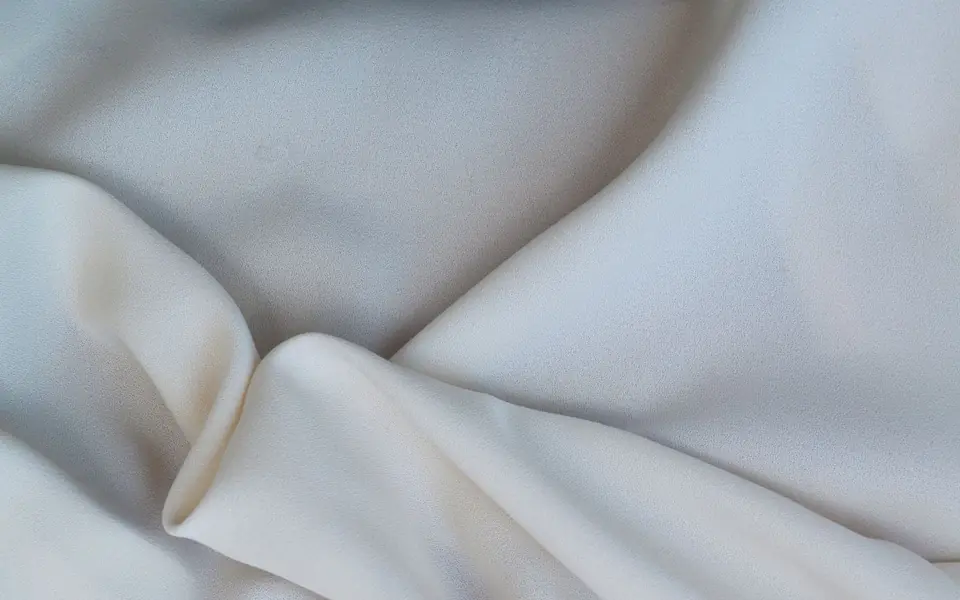
( 01 ) · fabric
Wholesale nida abayas
Nida is the cloth most abayas are made from: smooth, matte, light and easy to wash. We weave our range in standard nida and the finer Korean grade, and we print the measured weight of every one. From AED 90 a piece, 20 pieces in any mix.
In short
Nida is a matte, finely woven polyester made for abayas. It is light, drapes well, resists creasing and washes easily, which is why it is the default everyday abaya fabric. Standard nida runs about 115–180 GSM; the finer Korean grade runs lighter at about 90–120 GSM.
- Grades
- Standard, Korean, formal
- Weight
- 115–180 GSM, printed per style
- Minimum
- 20 pieces, any mix
- Price from
- AED 90 a piece
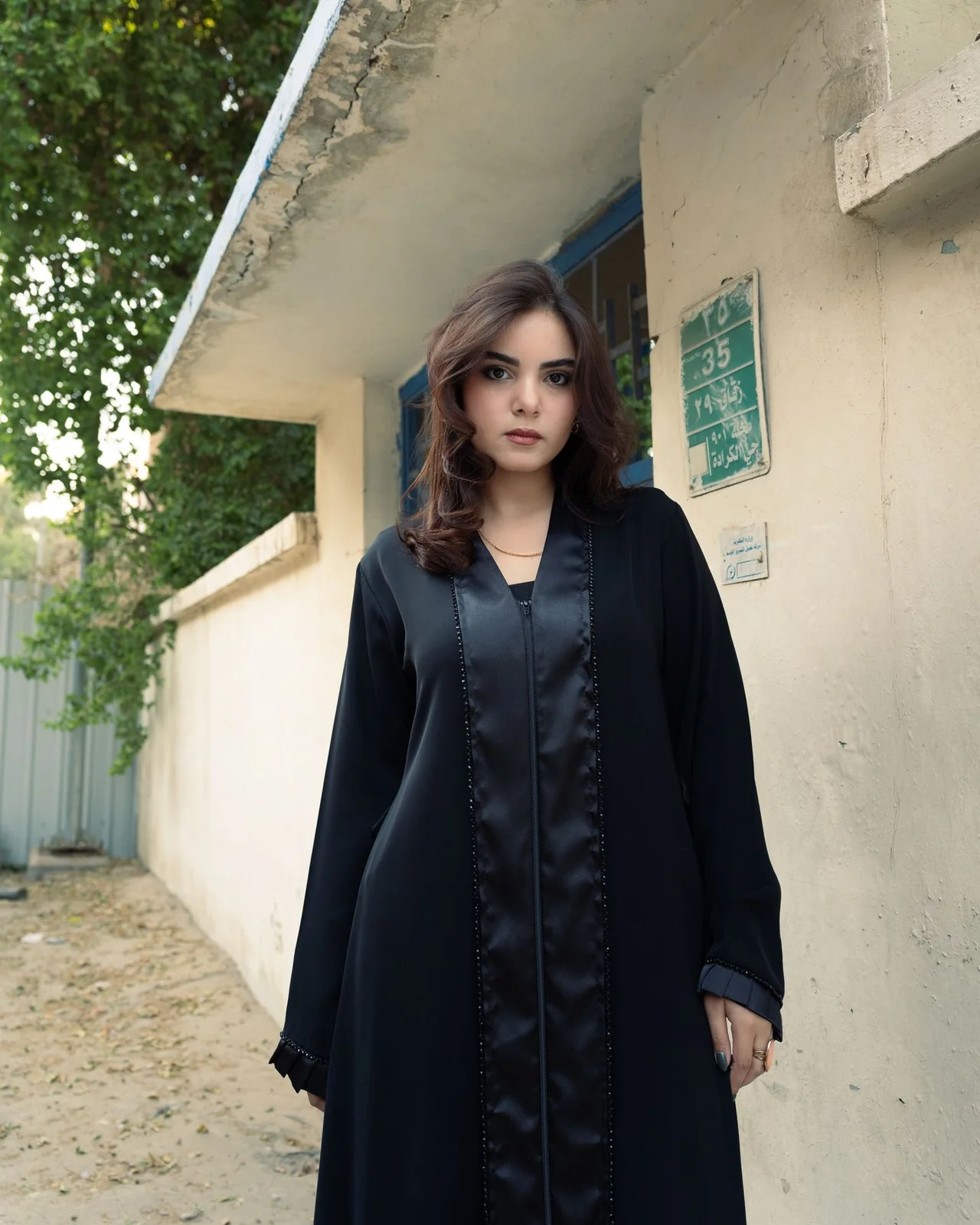
Our nida range is being photographed
Nida is in production every week. Ask for the line sheet and we will send the current styles, the grades we hold and the weight of each one.
Prices and terms reviewed September 2026
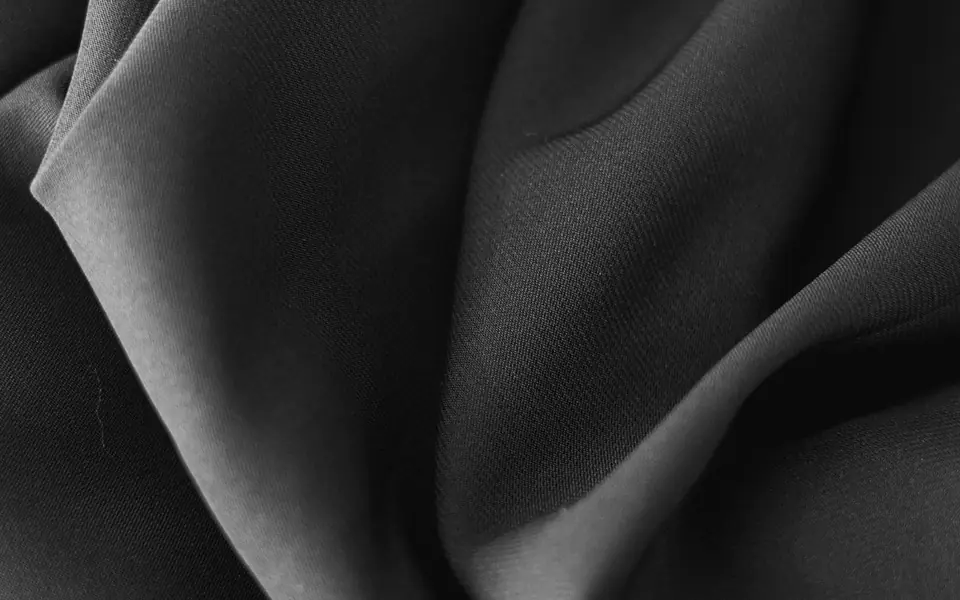
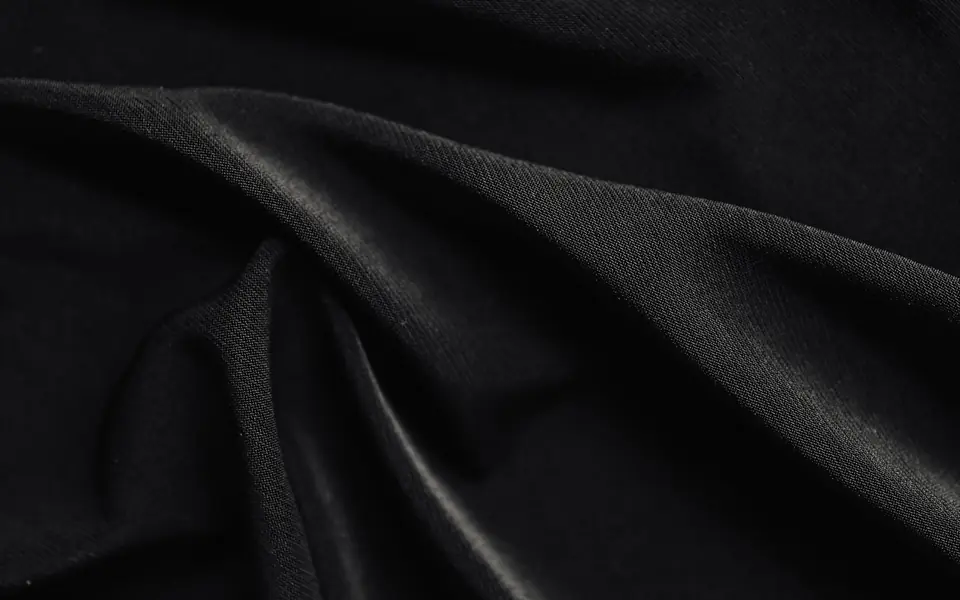
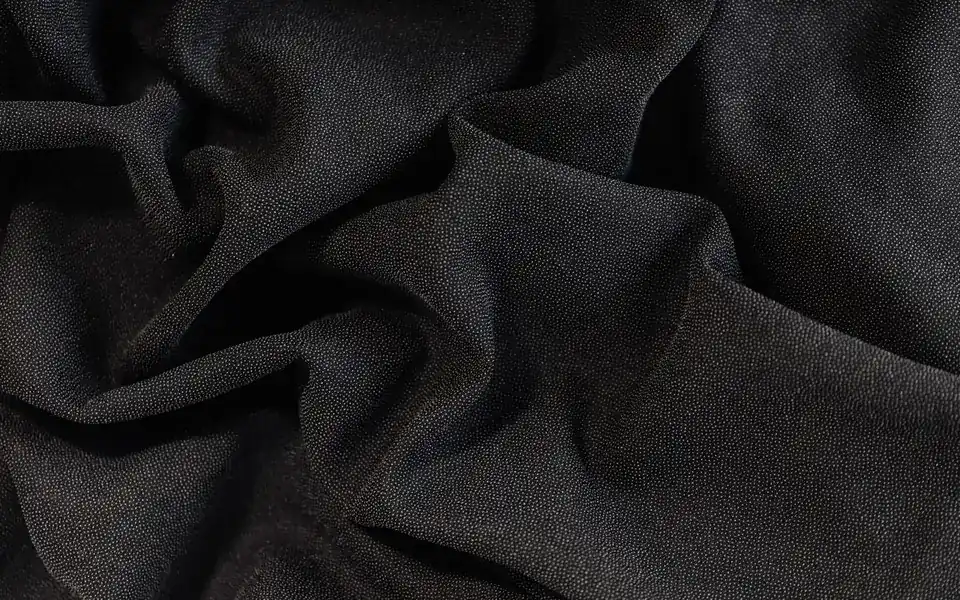
Why buyers pick nida
The fabric that carries your range
Most abayas sold anywhere are nida. It is the everyday cloth your customers reorder without thinking about it.
We publish the weight
Every style carries its measured GSM. "Nida" is a trade name, not a standard, so the number is the only thing that tells you what you are buying.
Easy to live with
Machine wash cold, hang dry, low iron. Fewer care complaints and fewer returns than a delicate cloth.
The nida grades we use
All of these are sold as "nida". They are different cloths at different prices, and the weight is what separates them.
| Grade | Weight | Finish | Best for |
|---|---|---|---|
| Nida | 115–180 GSM | Matte | Everyday volume, the core of a range |
| Korean Nida | 90–120 GSM | Matte to soft sheen | Boutique lines, occasion, stone work |
| Formal Nida | 115–150 GSM | Smooth, low sheen | Structured cuts that need more body |
| Zoom | About 160 GSM | Crinkled, slight sheen | A heavier, firmer handle |
Weights come from our own fabric guide and are the same numbers we publish there. Where a mill lot differs, the product page shows that style’s measured figure instead.
What nida fabric is
Nida is a finely woven polyester made for abayas. It is matte rather than shiny, light in the hand, and it falls in a straight line instead of clinging.
Standard nida is 100 per cent polyester. Some fitted cuts add a little elastane so the garment moves with the body.
Why the weight matters more than the name
Two mills can sell very different cloth under the same word. Buyers get caught this way constantly: the sample feels right, the bulk feels thin, and nobody wrote a number down.
Too light and nida goes see-through in sunlight. Too heavy and it feels stiff and hot to wear. Published guides contradict each other on the right range, which is exactly why we publish our own measured figure for every style rather than quoting a range we did not measure.
What to ask any supplier
Ask for the GSM and the fibre content in writing before you order, and hold the sample against daylight. A supplier who cannot give you a number is telling you something.
Standard nida or Korean nida
Korean nida is the finer grade: woven from thinner yarn, so it is lighter, softer and drapes closer to the body. It costs more per metre. Standard nida sits heavier at 115–180 GSM, Korean around 90–120 GSM.
The name describes a grade, not a country. Plenty of cloth sold as Korean nida is woven elsewhere, and that is not necessarily a problem as long as the hand and the weight are right. Judge the swatch, not the label.
Buying nida for your shop
Nida is where most of your volume will sit, so the decisions here matter more than on any statement piece.
Black first, and check the black
Black nida is the single biggest seller in almost every market. It is also where a cheap cloth shows itself: a poor black goes grey or bronze after a few washes.
Wash a sample before you commit to depth. It takes one cycle to learn what three hundred pieces would have taught you the expensive way.
Care instructions to put on your product pages
Nida is one of the easiest abaya fabrics to look after, and saying so plainly on your listings prevents returns.
- Machine wash cold on a gentle cycle, inside out
- Mild detergent, no bleach
- Hang to dry out of direct sun so the colour holds
- Low iron if needed, or steam
Questions buyers ask
What is nida fabric?
A finely woven polyester made for abayas. Matte, light, drapes well and resists creasing, which is why most abayas are cut from it.
What is the difference between nida and Korean nida?
Korean nida is the finer grade, woven from thinner yarn, so it is lighter and softer and drapes closer. Standard nida runs about 115–180 GSM and Korean about 90–120 GSM. Korean costs more per metre.
Is Korean nida actually made in Korea?
Often not. The name describes a grade rather than an origin, and much of it is woven elsewhere. Judge it by the hand and the weight, and ask where it was actually woven if it matters to you.
What GSM should nida be?
We publish a measured weight for every style rather than a blanket figure, because the same trade name covers very different cloth. Our standard nida sits around 115–180 GSM.
Is nida see-through?
Good nida is not. Very light weights can show through in bright sun, particularly in pale colours, which is why the weight is worth asking for before you buy.
Can nida go in the washing machine?
Yes, cold and gentle, inside out, with a mild detergent. Dry it out of direct sun and use a low iron if you need one.
Does black nida fade?
A good one holds its black. A cheap one goes grey or bronze after a few washes. Wash a sample before you order depth, because this is the most common complaint in the whole category.
Is nida hot to wear?
It is polyester, so it breathes less than cotton or linen. Lighter grades wear better in heat. For very hot markets, look at our linen and cotton blends alongside nida.
What is the minimum order for nida abayas?
20 pieces across the whole order, any mix of styles, colours and sizes, with a AED 2,000 minimum order value.
How much does a wholesale nida abaya cost?
From AED 90 a piece at our entry grade and a simple stitch. Heavier grades, lining and any handwork move it up. We quote per style.
Which colours do you make nida in?
Black leads everywhere, with a neutral range around it: beige, sand, grey, navy and soft browns. Ask for the swatch card for what is running now.
Can you put my label in a nida abaya?
Yes, on any style. Woven, printed or heat-seal labels with your care tags and packaging. The private label page covers the label minimums, which are separate from the garment minimum.
Does nida wrinkle?
Much less than cotton or linen. It travels well, which is one of the reasons it became the default everyday abaya cloth.
How fast can you ship nida abayas?
Ready stock leaves in 3 to 5 working days. Made to order takes 12 to 18. Courier transit is on top.
Can I get a sample before ordering?
Yes. Sample orders have no piece minimum, only a AED 2,000 minimum value, and it is real stock you keep and can sell.
What are your payment terms?
50–60% deposit before work starts, and the balance on dispatch, against photos of your packed cartons.
Buyers also look at
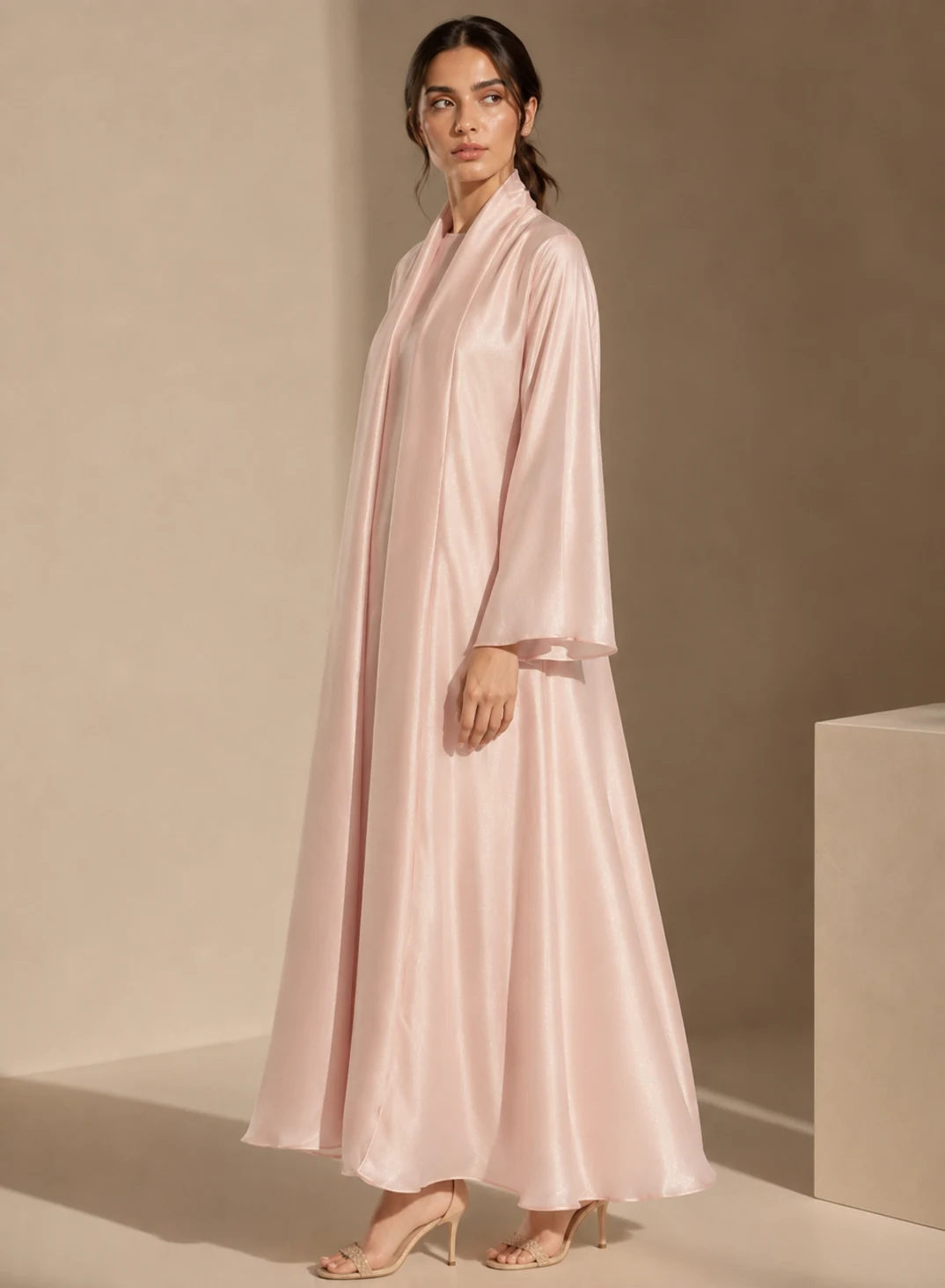
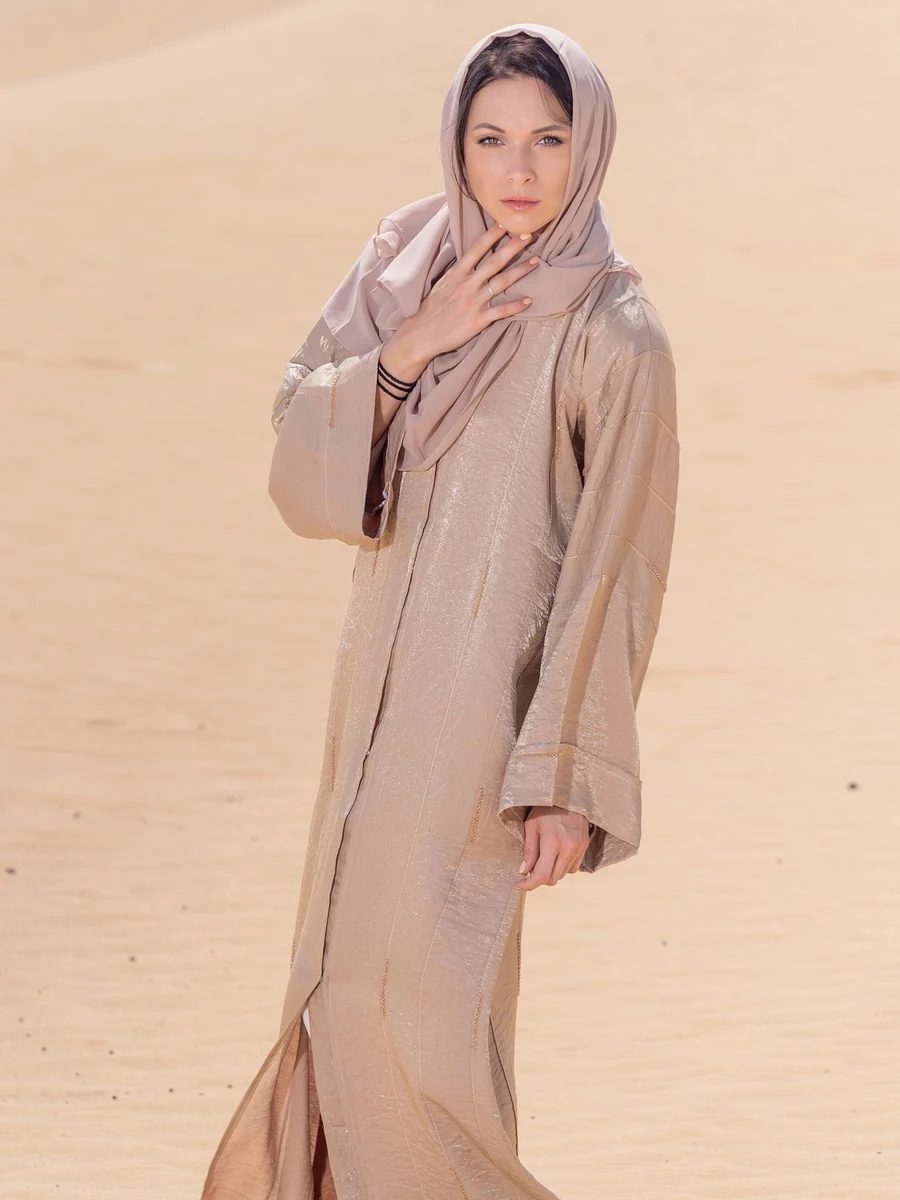
The rest of the range
- 01NidaThe everyday fabric
- 02Open abayaBest seller in the US, UK and EU
- 03Kimono abayaHighest-searched silhouette
- 04CrepeTravels without creasing
- 05Plus sizeGraded from a plus block
- 06EmbroideredYour artwork, made to spec
- 07Closed abayaFull coverage cuts
- 08Butterfly and batwingPhotographs well
- 09FarashaFor Ramadan and occasions
- 10LinenFor hot climates
- 11LuxuryLined and hand-finished
- 12Prayer dressOne-piece and two-piece
- 13Umrah and HajjWrinkle-resistant travel sets
- 14KidsMother and daughter sets
- 15HijabsMatched dye lots