Width instead of depth
20 pieces can be five designs in two colours rather than 20 of one thing you guessed at.

20 pieces and AED 2,000 for the whole order, with no minimum on any one style or colour. Mix as many designs, colours and sizes as you like to get there. From AED 90 a piece.

In any mix of styles and colours.
Both apply. The one you reach last is the one that counts.
Made to order runs 12 to 18.
No surcharge, no shorter catalogue, no slower queue.
The most common complaint in wholesale abaya buying is finding out too late that the minimum was per colour, not per style. You are told the minimum is ten, you plan on ten, and the invoice comes back at thirty because you asked for three colours.
Ours has no such catch. The minimum order is 20 pieces and AED 2,000, in any mix of styles and colours — whichever you reach last. Nothing else counts, and neither number changes after you ask for a quote.
This is the order we would suggest for a shop that has not sold abayas before. It clears both minimums without buying depth in anything.
Both minimums have to be met, so the order closes at whichever comes last. At our entry price of AED 90 a piece, 20 pieces is only AED 1,800, so an order of entry-price styles closes at 23 pieces. That is AED 2,070 of stock before freight and duty. Pick heavier fabric or embroidery on some of the styles and you reach the value sooner, though never with fewer than 20 pieces. We show freight and duty as separate lines so you always know the number that matters, which is the one at your door.
Four designs and two colours give you enough different things on the rail to see what your customer picks. 23 pieces of one design teaches you nothing except how much storage you have.
Every piece counts, whatever its style, colour or length. There is no minimum on any one design or colour, so a style can be three pieces and a test colour can be two.
The value counts as well: the goods have to add up to AED 2,000 before freight and duty, as the order above shows.
There is no limit on how many designs a single order can carry.
Most low minimum suppliers avoid this and hope you do not notice. You will notice, because the industry pages arguing against low MOQ are well written and you have probably already read one.
They are right about the arithmetic. 20 pieces genuinely costs more per piece to make than six hundred. What they get wrong is the conclusion, because the cheapest unit price is not the same as the cheapest mistake.
Laying up fabric, making the marker, threading and setting the machines, briefing the line, checking the first piece off. That work takes about the same time whether the run is a few pieces or six hundred.
On a big run it disappears into the per-piece price. On a small one it is a visible share of it. That is the honest reason small orders sit in the entry band.
Cloth is bought by the roll, and a roll is usually around a hundred metres. Mills will not dye a special colour in small amounts either.
This is why a colour can be a handful of pieces on our stocked fabrics but not always on a custom-dyed one, where the mill sets the minimum. When your choice pushes the minimum up, we tell you which choice did it and offer something close that does not.
Clothing is light and bulky, so couriers charge on the space it takes, not what it weighs. Clearance and paperwork fees are also fixed, so they land just as hard on 20 pieces as on three hundred.
On a small order, freight can be a quarter of what you spend. The fix is to fill the carton rather than ship it half empty. If you are ordering 20 pieces, ask us what ten more would cost, because the freight will barely move and your cost per piece falls twice over.
When you do not yet know what sells. Paying a bit more per piece for 20 pieces across four designs is cheaper than getting a great unit price on three hundred pieces of the wrong one.
Dead stock is the real cost of a first order, and almost every new buyer who fails does so with a warehouse full of one design they were sure about.
A low minimum is useless if you cannot restock the style that sells. Selling out in week two and waiting eight weeks is worse than never having the stock, because you have taught a customer to shop elsewhere.
Ready stock leaves here in 3 to 5 working days. Made to order takes 12 to 18. Add courier transit on top, which is usually 5 to 10 days.
If you can tell us early which styles you expect to chase, we will hold fabric for them. That is free and it is the single most useful thing a small buyer can do.
20 pieces and AED 2,000, in any mix, exactly as on your first order. We publish it because almost nobody else publishes a reorder minimum at all.
Your second order is quicker and simpler because the spec exists, your labels are already here and nothing needs sampling. Nothing about being a repeat buyer is worse, and several things are better.
This one catches people out and nobody in the abaya trade talks about it. Fabric is dyed in batches. Two batches of the same black can sit slightly differently, and on a rail, side by side, a customer can see it.
It matters most on black, which is most of what you will sell. Where a repeat order is coming off a different dye lot we tell you before cutting starts, so you can choose to hold for the original lot, take the new one for a separate display, or order deeper in one go next time.
The mix matters more than the total. Here is what we would do with a first order near the minimum, based on what actually sells rather than what photographs well.
Five designs at four or five pieces each beats two designs at a dozen. You are buying information as much as stock, and the information is worth more in the first season than the margin is.
Once you know which two designs carry your sales, go deep on those and drop the rest. That decision is easy to make with data and impossible to make with a guess.
Across nearly every market, plain black in an everyday weight is the biggest seller by a wide margin. Buy that deepest.
Use your second colour as a test rather than a bet. Three or four pieces is enough, since there is no minimum on a colour, and the sell-through tells you whether your customers want colour at all before you order more.
An even split across five sizes leaves you with the two extremes unsold. Retail buying normally weights the middle, something closer to one, two, three, two, one across a five size run.
If you do not know your curve yet, ask and we will send the split we see working for your market. It is a better starting guess than an even one.
Most suppliers publish one number and leave out the one that decides whether you can trade. We publish both.
20 pieces can be five designs in two colours rather than 20 of one thing you guessed at.
Split sizes however you like. No forced even split, no prepacks you have to take whole.
There is no minimum on a colour. Run black and one seasonal colour side by side, two or three pieces of the second, and let the till decide which one gets the repeat order.
Ready stock leaves in 3 to 5 working days, so a style that sells can be back on your rail inside two weeks.
What counts toward the minimum is on this page, not negotiated differently with every buyer who asks.
Payment, quality checks and paperwork are identical at 20 pieces and at 3,000. Small does not mean second class.
Four steps, and the arithmetic is done for you before you pay anything.
From the catalogue, or add a custom design if you have one. No limit on how many designs go into one order.
As many or as few of each as you like. There is no minimum on any one style or colour, so the split is entirely yours.
We confirm the order reaches 20 pieces and AED 2,000, tell you what is ready now against what is made to order, and quote the landed cost.
Deposit clears, we pick or produce, photograph the packed cartons and hand over to the courier.
Published, because almost nobody in this category publishes it.
Small orders are not punished, they are priced in the entry band. Growing out of it is the whole point.
The test band. Whole catalogue, no restrictions.
First step down. Most buyers reach it on order two or three.
Branding and packaging costs absorbed.
Booked capacity and a named contact.
Fabric moves the price more than quantity does, so the exact figure is quoted per style. The band you land in is set by your order total and never by how hard you negotiate.
A small order is picked, checked, photographed and documented exactly like a large one.
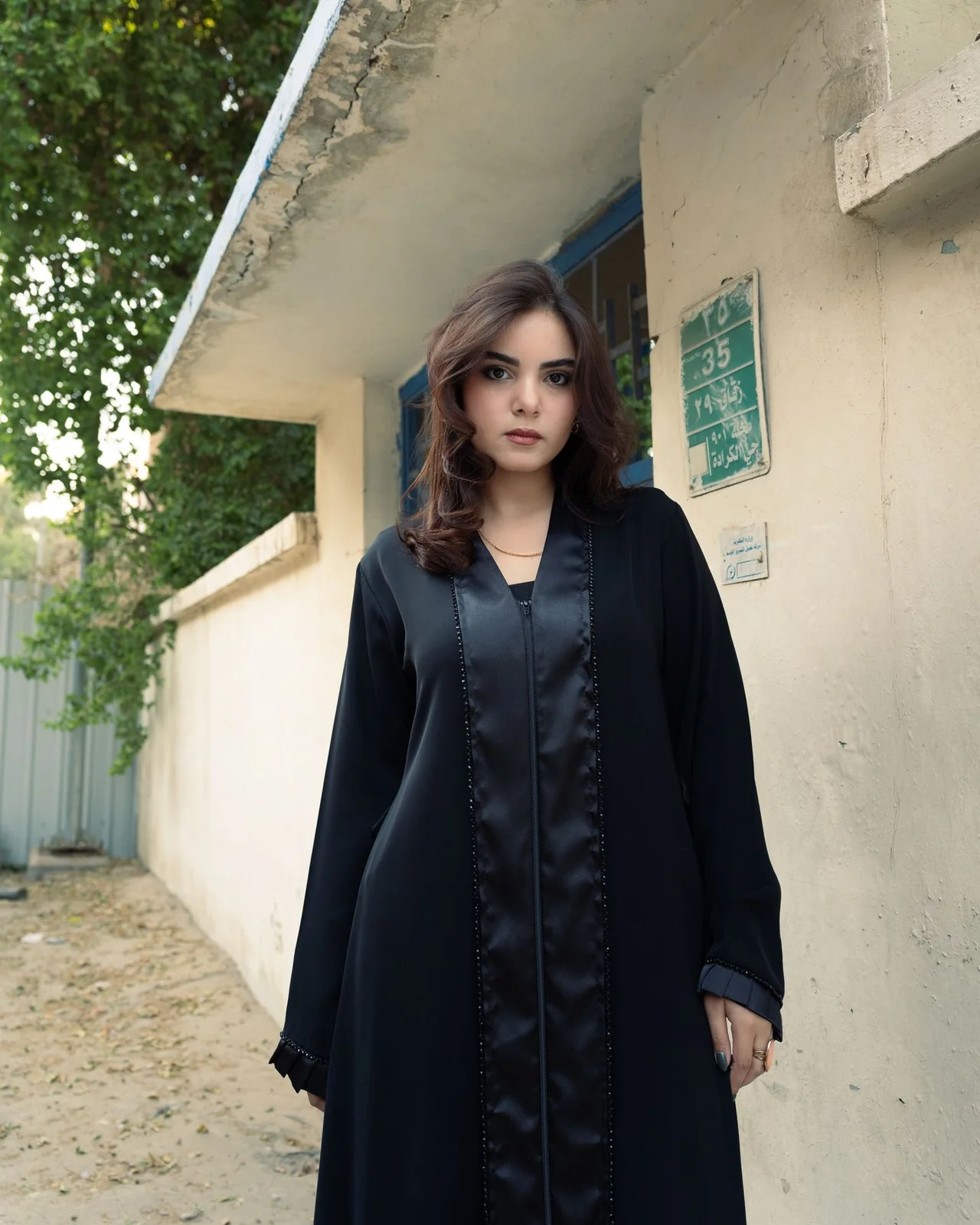
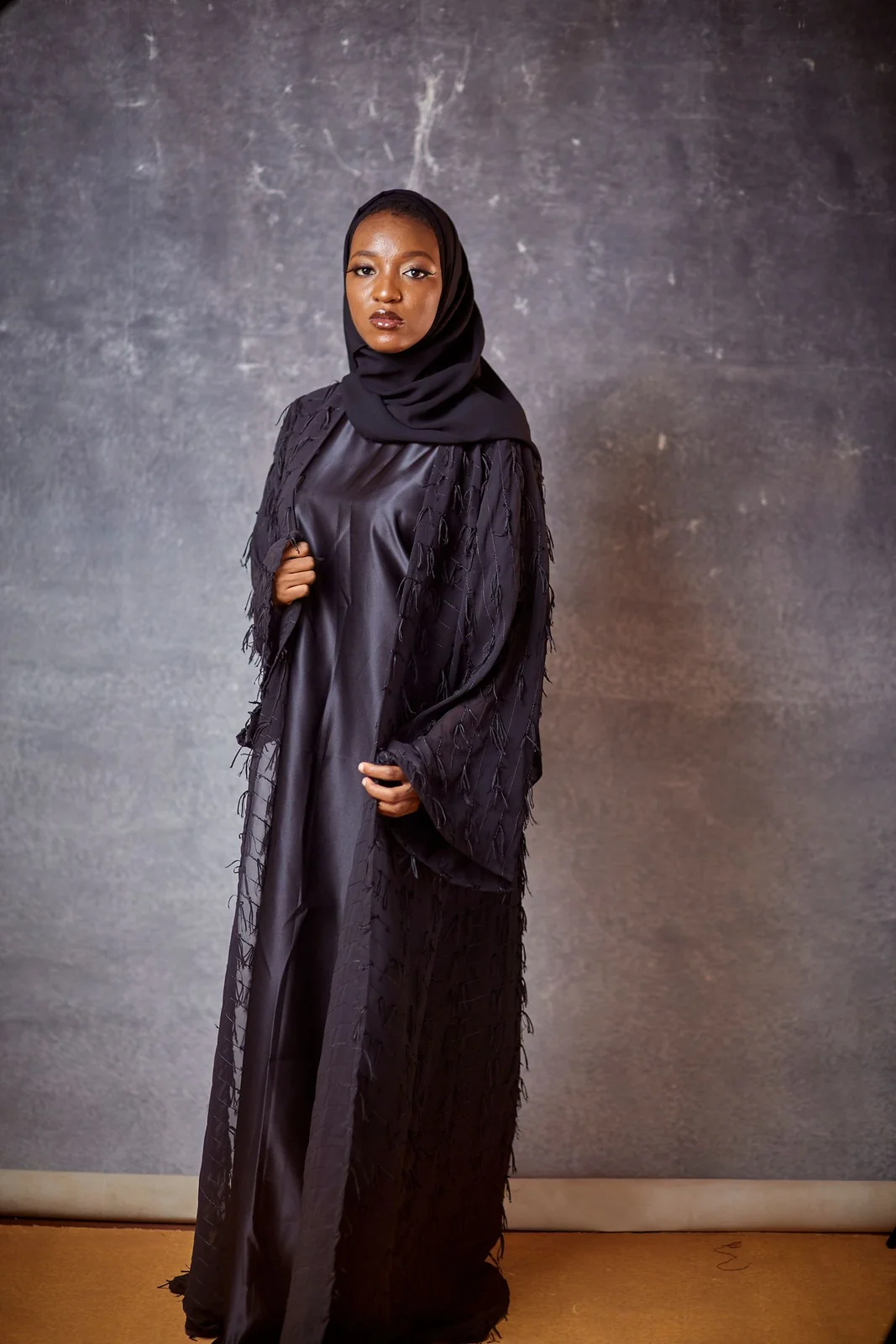
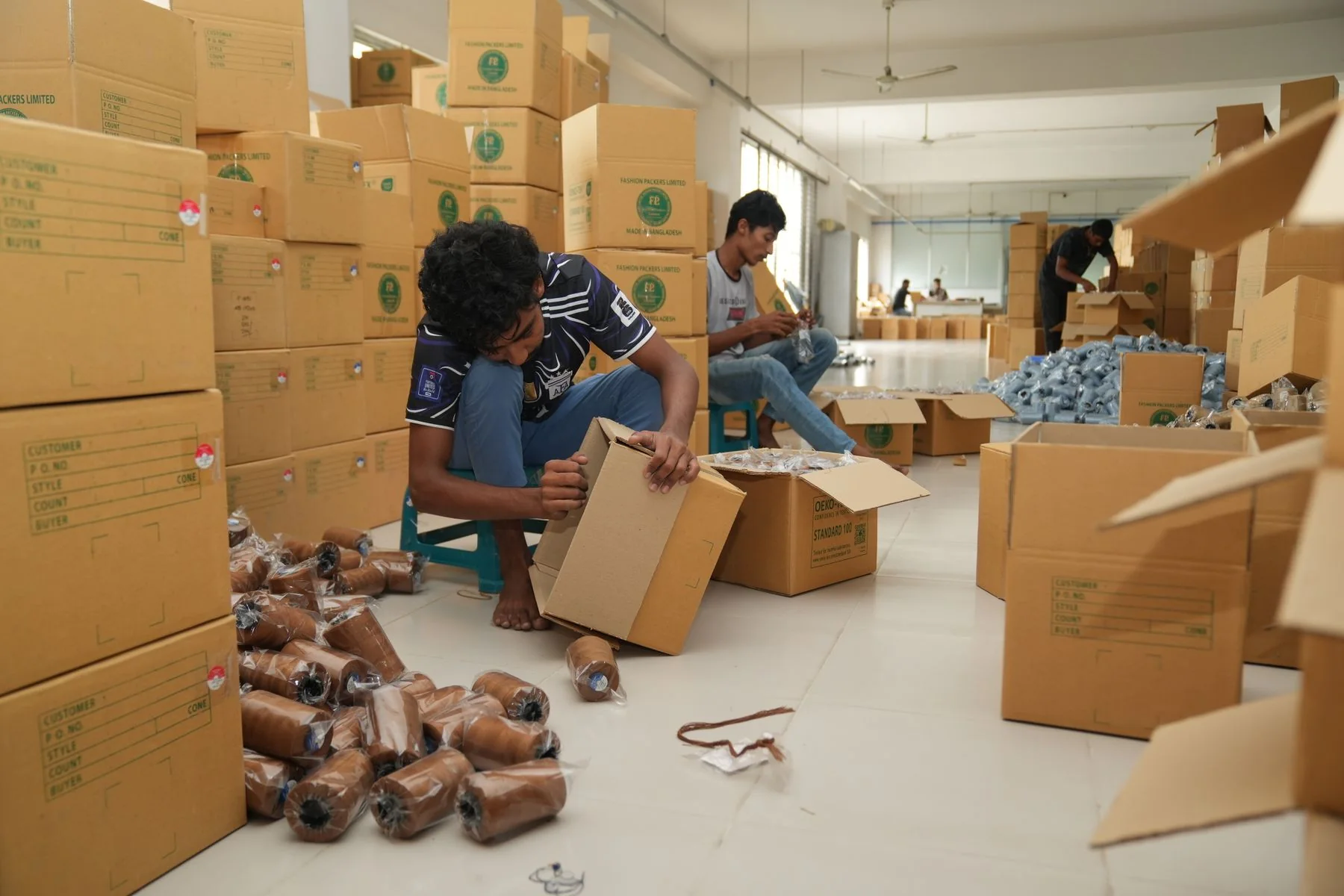
A low minimum is a tool for finding out what sells. It is not a way to run a business forever.
You have somewhere to sell and no sales history. Buying width teaches you your customer in one season instead of three.
You already sell well in one country and want to try another without committing a container to a hunch.
You need twelve designs in small numbers, restocked often. Not six hundred pieces of four.
Most suppliers publish a total and keep a per-colour rule back until you are already invested in the conversation. We do not have one.
20 pieces and AED 2,000, on this page, before you message anyone. No "contact us for MOQ".
What is written here is what appears on your invoice. Some sites in this category contradict themselves between the homepage and the FAQ.
And explain exactly why, so you can judge the trade for yourself instead of being sold on it.
Before your second black arrives next to your first. Nobody else in this category mentions it.
No handling fee, no minimum shipping charge dressed up as a policy, no slower queue for being small.
Same styles, same spec, same team. Growing does not mean starting the supplier search again.
A mixed order gets quoted in a couple of hours with these four things.
Names or codes from the catalogue, or pictures of what you are after.
Per style. Guessing? Say so and we will send the split we see working in your market.
City and country, so freight and duty can be quoted with the goods.
That decides whether we point you at ready stock or made to order.
Minimum order questions, answered with numbers rather than "it depends".
The minimum order is 20 pieces and AED 2,000, in any mix of styles and colours — whichever you reach last. Both numbers matter and both are published here.
Neither. It is on the whole order only. One design can be ten in black and two in beige, and a style you are unsure of can be a single piece.
If they add up to AED 2,000, yes. At our entry price of AED 90 a piece, 20 pieces is only AED 1,800, so an order of entry-price styles closes at 23 pieces. Published abaya minimums elsewhere run from 10 to 100 a colour, so 20 across the whole order is genuinely low rather than a headline.
However you want. Every piece counts toward the minimum whatever its length, so buy the split your customers wear.
No limit, and no minimum on any one of them. Five designs at four or five pieces each is a perfectly normal first order, and it is the one we would recommend.
Fewer pieces, yes. Less money, no. Below 20 pieces it becomes a sample order, which has no piece minimum, only a minimum value of AED 2,000. Below AED 2,000 the freight and clearance per piece stop making sense for you, not for us.
No. What is on this page is what appears on your invoice. If something in your spec forces a higher minimum, a custom dyed colour for example, you hear that while you can still change it.
We do: AED 2,000 of goods before freight, as well as 20 pieces, and both have to be met. On cheaper styles the value is usually the one you reach last. On heavier or embroidered ones it is the piece count.
Width over depth. Five or six designs at three to five pieces each, mostly black, with one colour as a test. You are buying information as much as stock.
Two is plenty for a first order. Black carries the volume nearly everywhere. A few pieces of a second colour tell you whether your customers want colour at all before you commit to more.
Weight the middle rather than splitting evenly. Something like one, two, three, two, one across a five size run. Tell us your market and we will send the split we see working.
Yes, though it carries its own pattern work and sampling, so it will not ship as fast as catalogue stock. Many buyers put one custom style into an otherwise catalogue order.
Before cutting starts, usually yes, and it often improves your freight cost. Once the run is on the line, additions become a second order.
Worth asking about. Freight on a half empty carton costs nearly the same as a full one, so adding ten pieces to a small order sometimes barely moves your shipping bill while cutting your cost per piece.
From AED 90 a piece in our entry fabric. At that price you need 23 pieces to reach the AED 2,000 minimum. Heavier cloth, lining, embroidery and beadwork all push the price up. Send your style list and we quote firm figures.
You get the entry band, which every buyer starts in. You do not get a worse garment, a shorter catalogue, slower service or a lower priority on the line.
Setup work does not shrink with the order. Laying fabric, making the marker and setting the machines take the same time for 20 pieces as for six hundred, so on a small run that cost is a bigger share of each piece.
At 100, 300 and 1,000 pieces. If your order sits just under a step we will tell you what closing the gap is worth rather than letting you miss it by four pieces.
None. No handling charge, no minimum invoice fee, no restocking fee. The entry band is a price, not a punishment.
The same as everyone gets: a 50–60% deposit to start, and the balance on dispatch, against photos of your packed cartons.
It depends on destination and carton size, and we quote it before you pay. Be ready for it to be a meaningful share of a small order. Clothing is light and bulky, so couriers charge on the space it takes up.
Clearance and paperwork fees are fixed no matter the size, and volumetric charging hits garments hard. This is the real cost of buying small, and it is worth planning for rather than being surprised by.
Fill the carton. Order slightly more, or combine styles into one consignment rather than two shipments a month apart. We will tell you the cheapest way to pack what you are buying.
Door to door to more than 40 countries. There is no minimum quantity attached to any shipping option, and no destination is gated behind a bigger order.
Your choice. On DDP we clear and pay and quote you a delivered price. On DAP you or your broker clear it. We estimate the duty either way before you commit.
Ready stock leaves here in 3 to 5 working days. Made to order takes 12 to 18. Courier transit is on top, usually 5 to 10 days.
It is the same 20 pieces and AED 2,000, in any mix. Reorders are simpler and quicker because your spec and labels are already here, and nothing needs sampling.
Yes, and it costs nothing. Tell us at the time of your first order which styles you think will move and we will keep cloth aside for the repeat.
Usually, and where it might not we will say so first. Fabric is dyed in batches and two blacks from different batches can look slightly different on the same rail. If your repeat is coming off a new dye lot you hear it before cutting starts.
Three options: wait for the original lot if we still have it, take the new lot and display it separately, or order deeper in one go next time. Which is right depends on whether the two will ever hang side by side.
Any time, in any quantity, as part of an order that reaches the minimum. There is no charge for adding colours to a style we already make for you.
Gulf lengths 52 to 60 as standard, extendable to 64, and UK or US dress sizing where that is your market. Plus sizes are drafted from a plus block rather than scaled up from a small one.
Ours is made to a published measurement sheet, and you get that sheet. If your customers sit between two lengths, ask us and we will tell you which way to buy.
Look at it under strong light, steam one piece first, then check the hem and the overlock inside. Those three things catch most of what goes wrong, and they take about five minutes.
Not for change of mind, which is standard in the trade. Faulty or incorrect goods are a different matter: tell us within seven days with photographs and we replace or credit them.
Start with a sample order and judge the goods, the packing and the date for yourself. After that your spec is in writing and your cartons are photographed before you pay the balance. This is the biggest fear small buyers have when sending money abroad, and evidence settles it faster than any certificate.
Yes, a 50–60% deposit before work starts. Credit terms are rare for new accounts anywhere in this trade. You pay the balance on dispatch, against photos of your packed cartons.
No. The published lead times on this page apply at 20 pieces, and you get a named person who answers rather than a shared inbox.
Yes. Every carton is photographed packed and sealed, and the balance invoice goes out against those photos. You are paying the last part against evidence, not a promise.
Yes. We send photographs as your order is made, then photos of your packed cartons before the balance is due. Anything faulty you find after delivery is covered if you tell us within seven days.
Tell us exactly what is wrong. Faults are replaced or credited. If it is a fit or fabric choice that did not suit your customers, that is useful information and it changes what we suggest for your second order.
Send a style, colour and size split. We check it against the mix policy, price it, and tell you what ships in 3 to 5 days against what takes three weeks.