
( 03 ) · silhouette
Wholesale kimono abayas
Wide-sleeve, open-front kimono cuts made in the UAE. The relaxed shape that younger buyers in the UK and US keep asking for, and the one most often confused with three other cuts. From 20 pieces in any mix.
In short
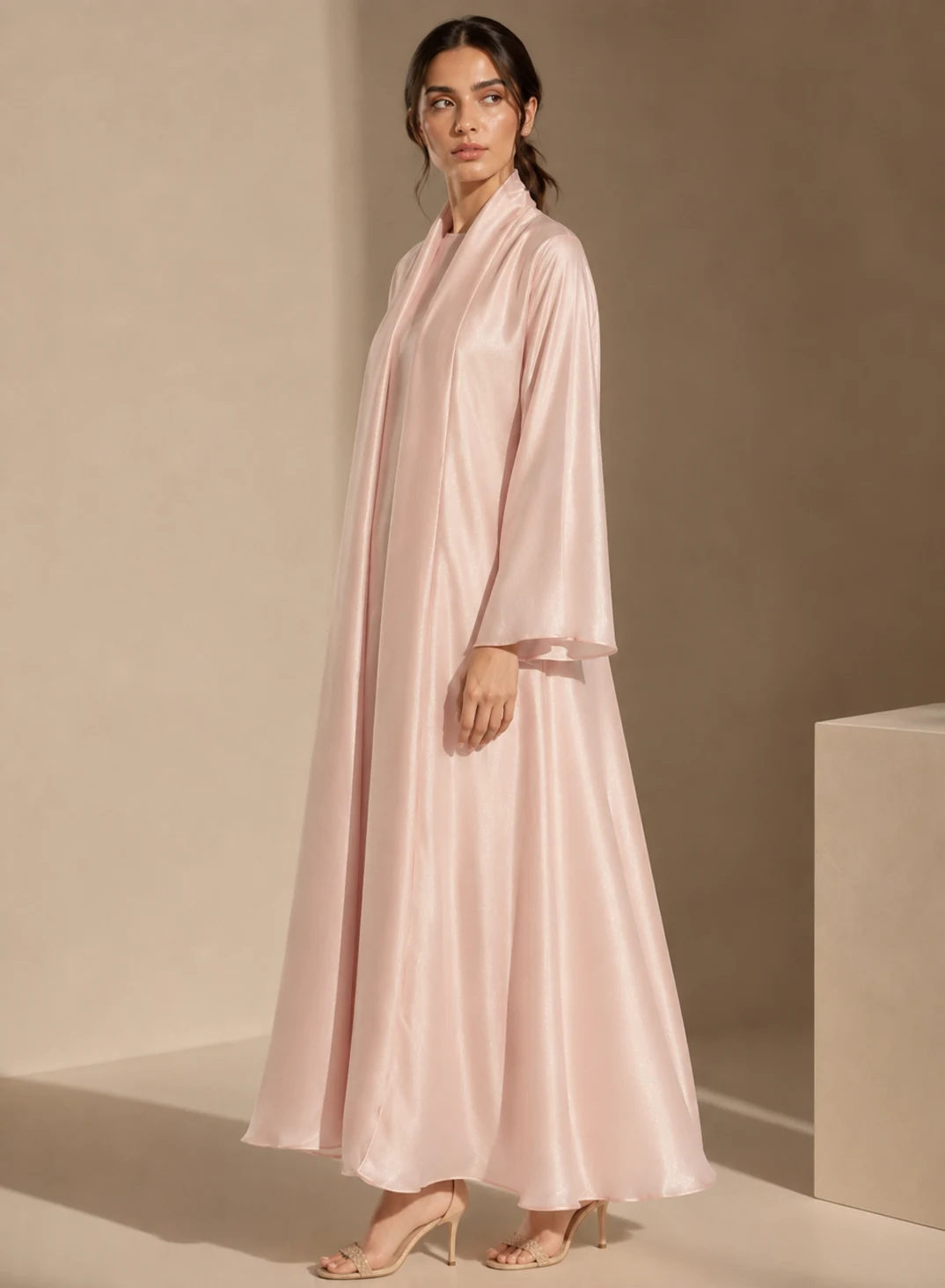
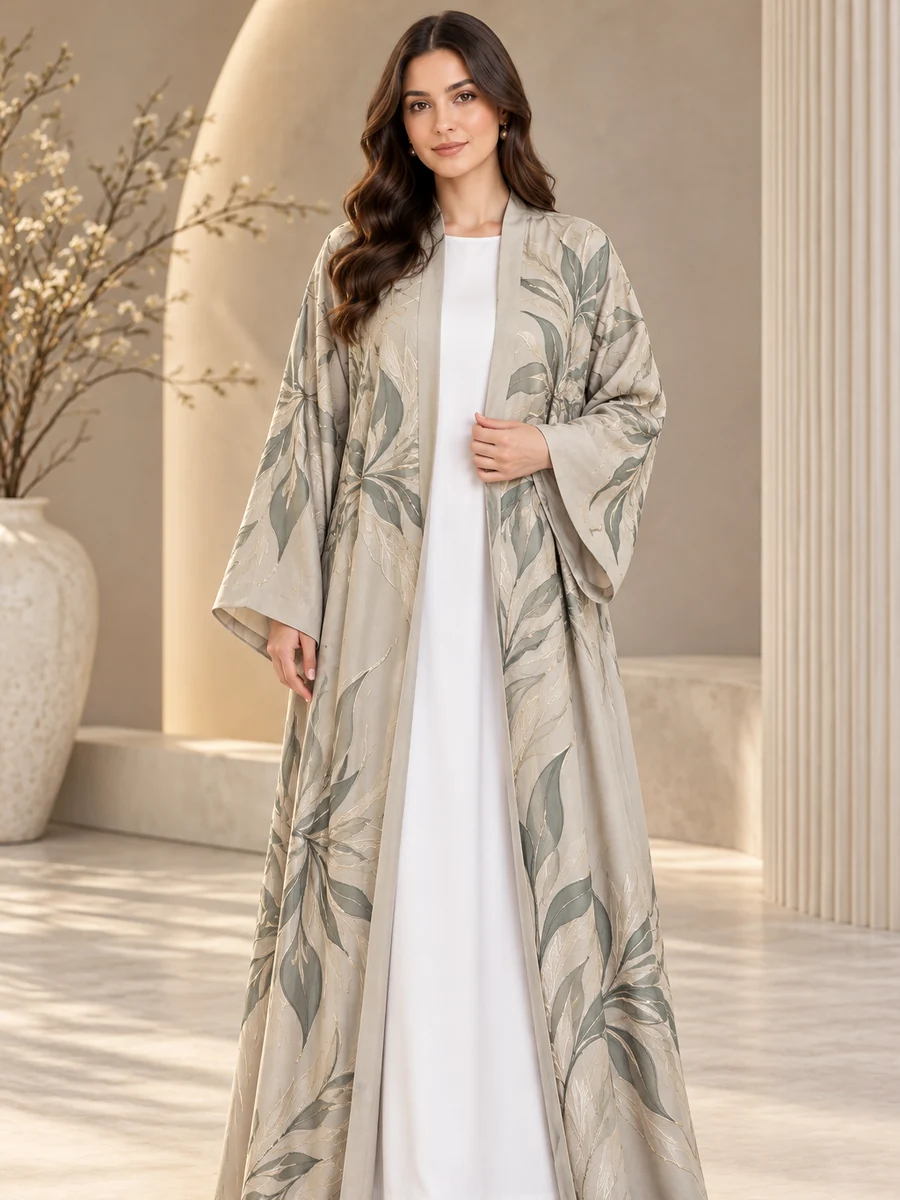
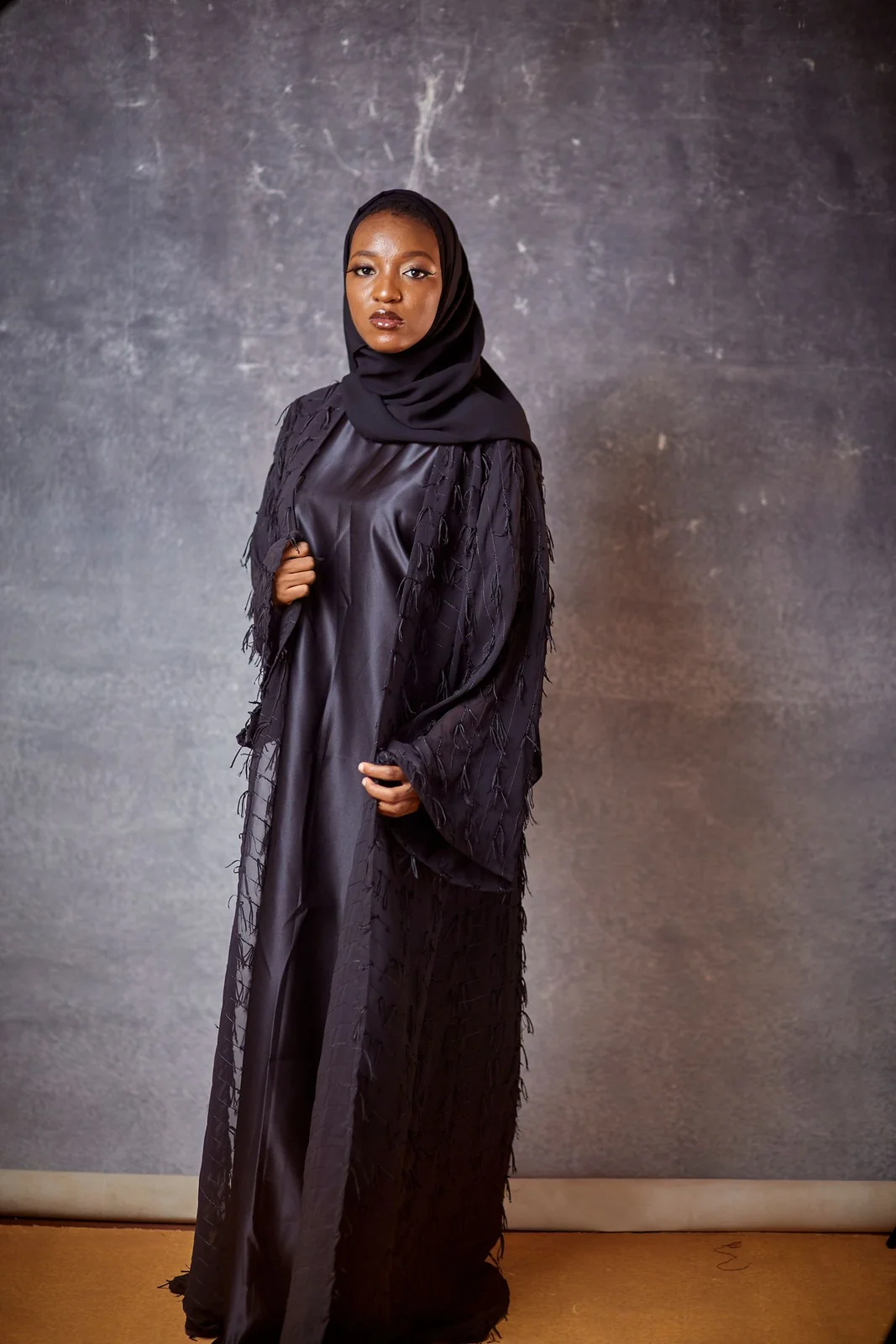
A kimono abaya is an open-front abaya with wide, relaxed sleeves and a draped body, borrowing its proportions from the Japanese kimono. It has no front fastening and is usually worn over a matching inner dress. The difference from a farasha is the body, not the sleeve.
- Cut
- Wide sleeve, open front
- Fabrics
- Satin, nida, crepe
- Minimum
- 20 pieces, any mix
- Lead time
- 12–18 days, made to order
Kimono cuts are made to order
We are photographing the kimono range now. Send the fabric and colours you want and we will quote it, or ask for the line sheet as it stands today.
Prices and terms reviewed September 2026
Why buyers pick kimono abaya
The shape buyers are asking for
Kimono and open-front cuts are named across every 2026 trend round-up we checked. It is the silhouette a younger customer recognises on sight.
Forgiving to fit
A wide sleeve and a loose body mean fewer fit returns than a tailored cut, which is worth real money when you are paying return postage.
Works over anything
Sold as a set with its inner dress, or bought by customers to layer over their own clothes. Two ways to sell the same piece.
Kimono, open, cardigan or farasha
Four cuts that get sold under each other’s names. This is how we use the words, and we use them the same way everywhere on this site.
| Cut | Sleeve | Body | Sells as |
|---|---|---|---|
| Kimono | Wide, cut in one with the body | Relaxed and draped | Everyday layering |
| Open | Set-in, straight | Straight front, closer to the body | The safe first order |
| Cardigan | Set-in, slimmer | Tie or single fastening at the waist | Workwear |
| Farasha | Ultra-wide, cape-like from wrist to hem | Maximum volume | Eid and occasion |
If a supplier cannot tell you which of these four they are quoting, ask for the flat measurement across the sleeve before you order.
What a kimono abaya is
A kimono abaya is an open-front abaya with wide sleeves cut in one piece with the body, so the whole garment hangs in a relaxed line from the shoulder. There is no fastening at the front.
The name describes the proportions, borrowed from the Japanese kimono. The garment itself is modest wear with its own construction, usually sold with a matching inner dress.
Kimono or duster: the same thing?
Usually, but not reliably. Plenty of suppliers use "duster abaya" for exactly this cut. Others use it for a two-piece product, where a separate outer duster is sold with its own dress.
Before you order from anyone, ask which one they mean. It is the most common source of a wrong delivery in this category.
Kimono or farasha
Both have big sleeves, and that is where the confusion starts. The difference is what carries the drama.
A farasha is about the sleeve: a cape-like panel running from wrist to hem, built for occasion wear. A kimono is about the body: a relaxed line that works on an ordinary Tuesday. If your customer wants to wear it to a wedding, she wants a farasha.
Buying kimono abayas for your shop
The wide sleeve is the whole point of this cut, and it is also what makes the fabric choice matter more than usual.
Fabric has to hold the sleeve
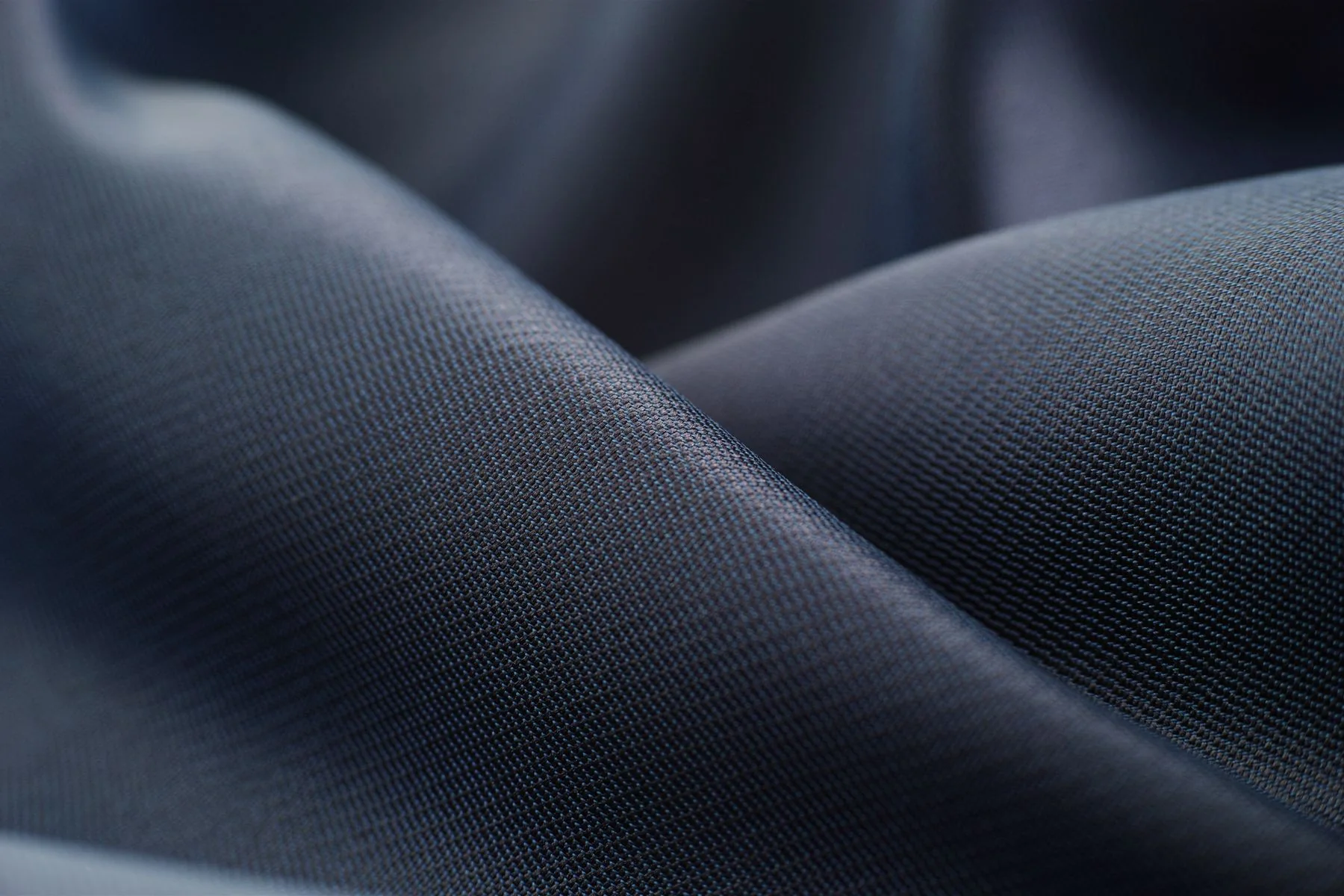
A wide sleeve in a stiff cloth stands away from the arm and looks cheap. In a fabric that is too thin, it collapses.
Satin, nida and crepe all work. We will send hangers so you can feel the difference before you commit, because this is not a decision to make from a photograph.
Sizing
Same convention as the rest of the range: the size is the length in inches from shoulder to hem, chosen from your customer’s height rather than her dress size. We grade 52 to 60 as standard and make 62 to 66 to order.
A kimono forgives the body more than a fitted cut, so if a customer sits between two sizes, the taller one is usually the safer sell.
Questions buyers ask
What is a kimono abaya?
An open-front abaya with wide sleeves cut in one with the body and a relaxed, draped line. No front fastening, and usually sold with a matching inner dress.
What is the difference between a kimono abaya and an open abaya?
Both open at the front. The kimono has wider sleeves and a looser body; a standard open or cardigan cut sits closer to the body with a straighter front and a set-in sleeve.
Is a kimono abaya the same as a duster abaya?
Often yes. Some sellers use "duster" for a different two-piece product, where a separate outer layer comes with its own dress. Ask which one a listing means before you order.
What is the difference between a kimono abaya and a farasha?
A farasha is defined by ultra-wide, cape-like sleeves and maximum volume, and sells for occasions. A kimono is defined by the relaxed body and sells for everyday wear.
Is the kimono really the most popular abaya style right now?
Third-party trend data puts "kimono abaya" ahead of other named silhouettes through 2025. We have not measured that ourselves, so treat it as a strong signal rather than a guarantee, and test it with a small first order.
What is the minimum order for kimono abayas?
20 pieces across the whole order, in any mix of styles, colours and sizes, with a AED 2,000 minimum order value.
Do kimono abayas come with an inner dress?
Most are sold as a set, the same as open abayas, because an open front needs something underneath. Where a style is sold alone, its product page says so.
What fabric works best for a kimono cut?
Something fluid enough to let the wide sleeve fall. Satin, nida and crepe are the three we would put in front of you. Ask for hangers before you decide.
What sizes do wholesale kimono abayas run?
The size is the length in inches from shoulder to hem. We grade 52 to 60 as standard and make 62 to 66 to order.
Do you make kimono abayas in plus sizes?
Yes, to order, drafted from a plus block rather than scaled up from a standard size. The plus size page explains how the grading works.
Can I private label a kimono abaya?
Yes, on any style we make. Woven, printed or heat-seal labels, your care tags and your packaging.
How fast can you ship kimono abayas?
Made to order takes 12 to 18 working days from a cleared deposit. Anything held as ready stock leaves in 3 to 5. Courier transit is on top.
What is an obi belt, and do kimono abayas come with one?
A wide sash tied at the waist, borrowed from the kimono itself. Some styles include one and some do not, so check the product page or ask us.
Can I mix kimono styles with other cuts in one order?
Yes. Every style, colour and size counts toward the same 20 piece minimum.
Is a kimono abaya for daily wear or occasion wear?
Daily wear, mostly. It is relaxed enough for everyday use in Western markets and often worn in the Gulf as a layer over an evening set.
Is calling it a "kimono" abaya a problem?
The name describes the proportions the cut borrows, not the Japanese garment itself. It is the term buyers search and the term the trade uses. If it does not suit your brand, we will label it an open or duster cut instead.
What are your payment terms?
50–60% deposit before work starts, and the balance on dispatch, against photos of your packed cartons.
Buyers also look at
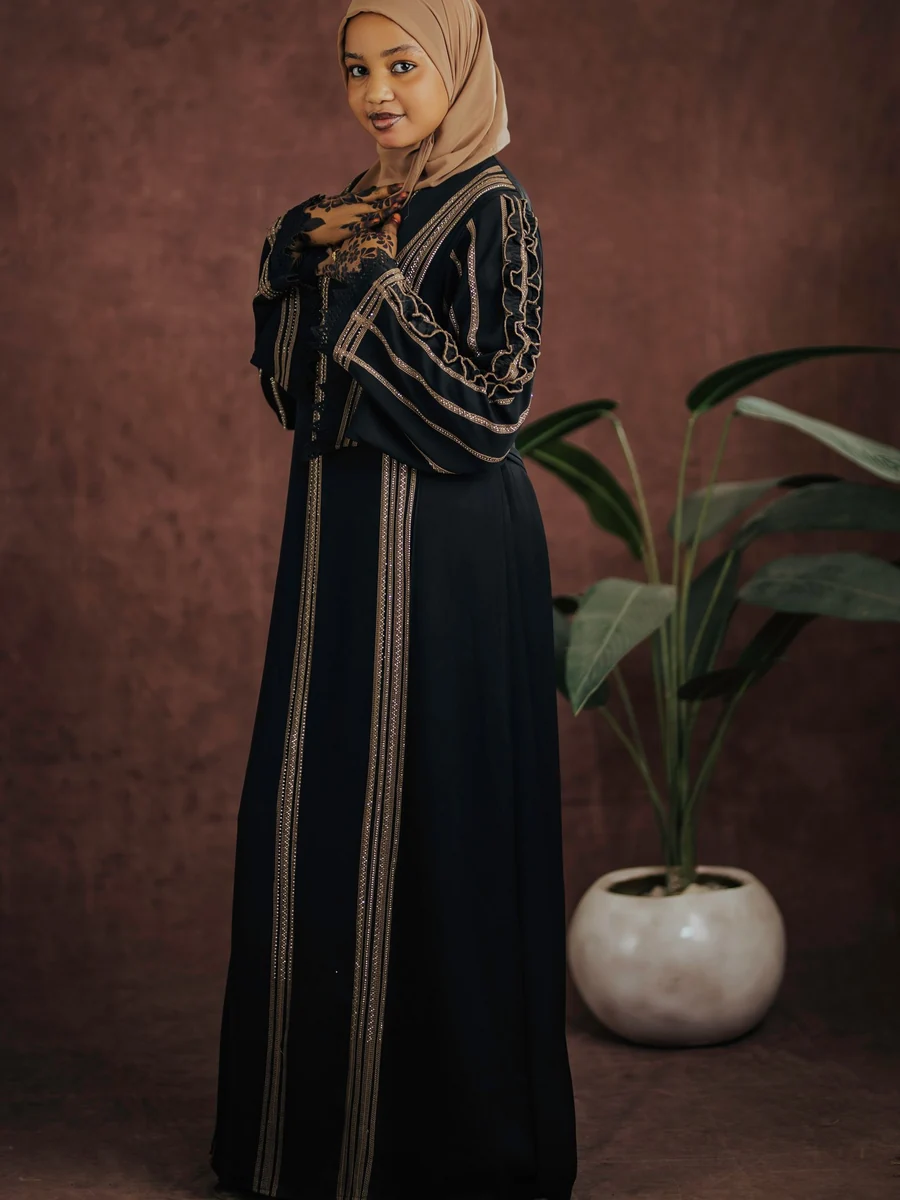
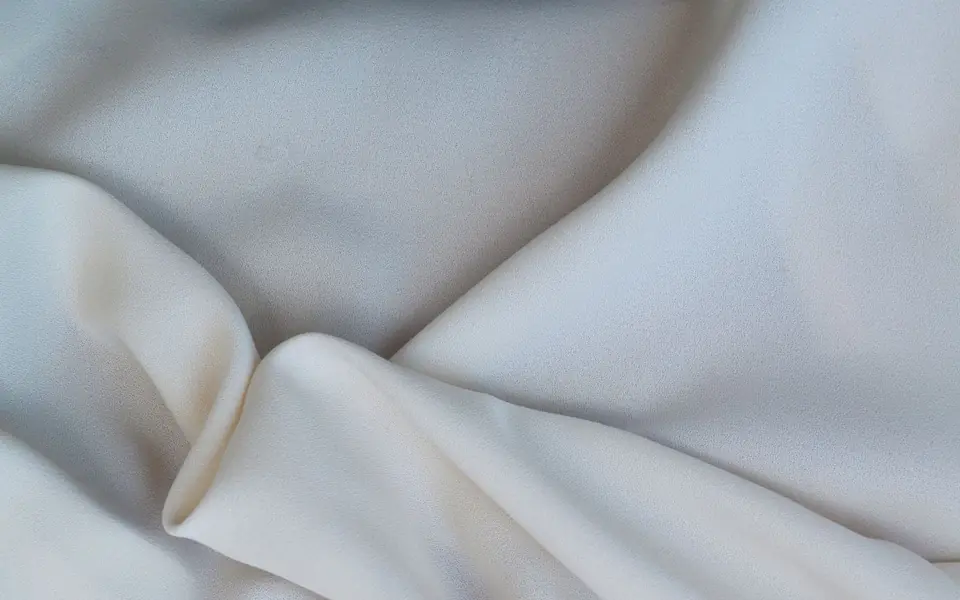
The rest of the range
- 01NidaThe everyday fabric
- 02Open abayaBest seller in the US, UK and EU
- 03Kimono abayaHighest-searched silhouette
- 04CrepeTravels without creasing
- 05Plus sizeGraded from a plus block
- 06EmbroideredYour artwork, made to spec
- 07Closed abayaFull coverage cuts
- 08Butterfly and batwingPhotographs well
- 09FarashaFor Ramadan and occasions
- 10LinenFor hot climates
- 11LuxuryLined and hand-finished
- 12Prayer dressOne-piece and two-piece
- 13Umrah and HajjWrinkle-resistant travel sets
- 14KidsMother and daughter sets
- 15HijabsMatched dye lots