Pattern drafting
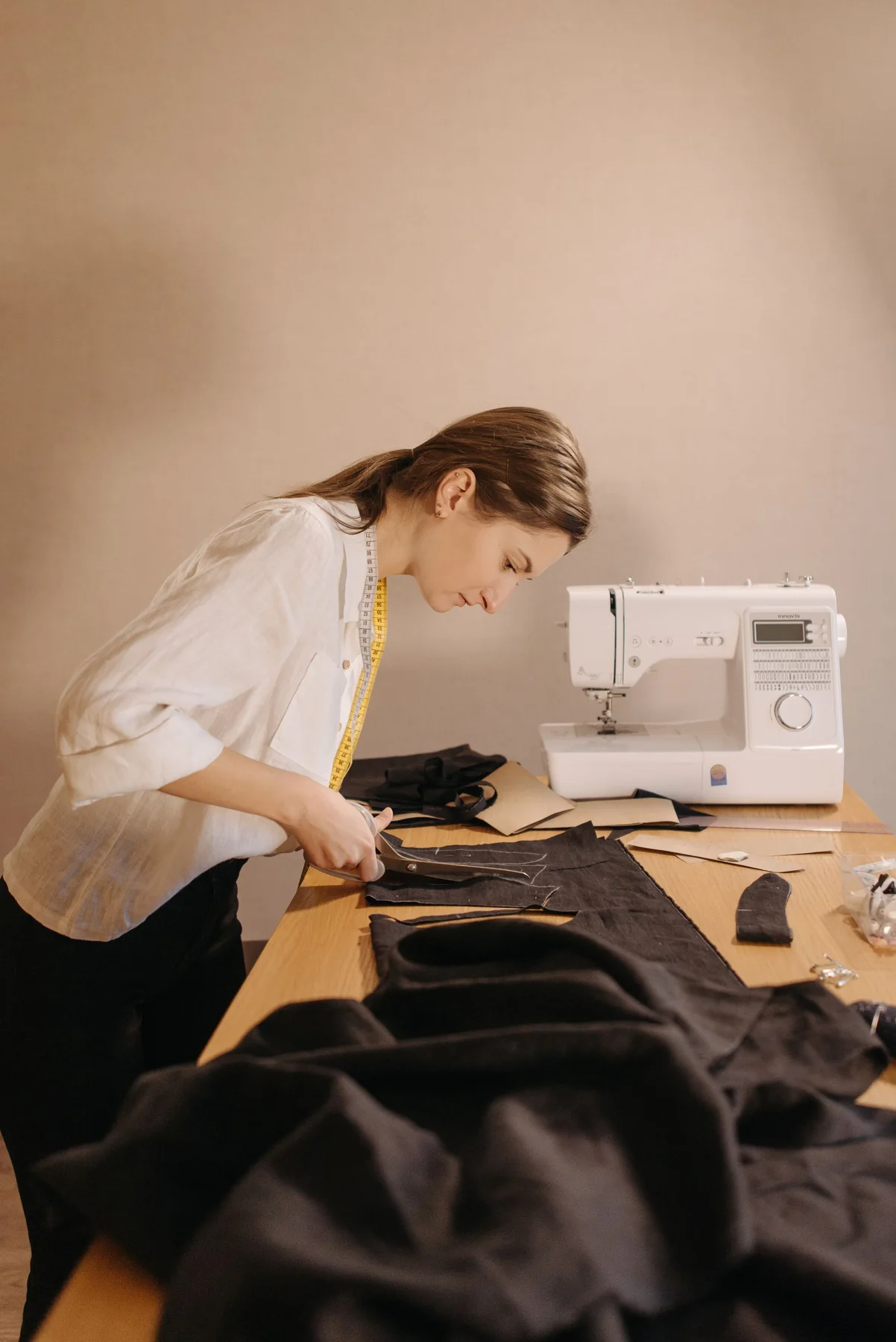
Your sketch or reference garment turned into a cutting pattern by a patternmaker. Not traced off the nearest stock block.

Send a photo, a sketch, an abaya you want copied, or a full tech pack. We draft the pattern, make a sample, fix what you do not like, then produce it. The design stays yours.
First run. Repeats of an approved pattern run 12–18.
Written into the quote. Extra rounds priced before they start.
Or UK and US sizing if that is your market.
A pattern we draft for you is not sold to anyone else.
Cut and sew means the garment is built for you from flat fabric. Someone drafts a pattern, cuts the pieces and sews them together to your spec. It is the opposite of buying something off our shelf and putting your label in it.
You need it when the abaya you want to sell does not exist yet. A sleeve that falls differently, a length your market wants and nobody stocks, a closed front where everyone else does open, or a fit that works for your customers rather than the average of everyone’s.
Full custom is not always the right answer. It is slower and the first run costs more. Be honest about which of these you actually need.
Pick a style we already make. Fastest and cheapest, and the right call for a first order while you work out what sells.
Take an existing pattern and change the length, the sleeve, the neckline or the fabric. Much cheaper than starting from nothing because the block already fits. Most buyers who ask for custom really want this.
A new pattern drafted from your design or your reference garment. The right call when the shape is the reason customers pick you. Costs a pattern fee once, then behaves like any other style.
Most factories ask for a tech pack and leave it there, which is not much help if you have never made one. You can start with far less than that.
Send whatever you have. We will tell you what is missing and ask the questions your file does not answer.
In rough order of how much back and forth they save:
If you want to build one, or want to understand what we send back, it is these five things.
The garment drawn front and back, flat, with callouts pointing at the details that matter.
Every fabric, thread, zip, button and label that goes into it, with the colour and supplier for each.
The list of measurements that define the fit, with the tolerance allowed on each. Centre back length, chest, sleeve, hem sweep, and so on.
Which seam goes where, stitch type and density, how the hem is finished, how the facing is attached.
Where each label sits, what the tags say, and how the finished piece is folded and bagged.
We write the tech pack as part of developing your style, and it is yours to keep. Some buyers find that odd, since it means you could take it to another manufacturer.
We would rather earn the repeat order than hold your documents hostage. A brand that cannot get its own spec out of its supplier is stuck, and buyers know it.
The pattern is where a custom order is won or lost. Everything downstream inherits a mistake made at this stage, and no amount of careful sewing fixes a badly drafted armhole.
Your pattern is drafted by a patternmaker, not traced off a stock block and hoped for.
You do, for anything you bring us or develop with us. We keep a copy on file so repeat orders match, and we do not put it in the catalogue.
If you decide to produce somewhere else later, ask and we will send it to you. That is an unusual thing for a manufacturer to say out loud, which is rather the point.
Gulf sizing runs on length: 52, 54, 56, 58, 60, measured down the centre back. The problem is that in most grading, width is tied to length, so a tall slim customer and a shorter fuller customer are pushed into the same size and one of them sends it back.
Tell us your customer and we will grade length and girth separately where it matters. If you are selling into the UK or US we can grade to dress sizes instead, or put the length on the label and the conversion on the hang tag.
A 4XL graded up from a small block fits nobody. The armhole ends up in the wrong place and the shoulder slope is wrong before you get anywhere near the body.
We draft from a plus block and grade outward from there. It costs a little more in pattern work and it is the difference between a plus range that sells and one that comes back.
Almost every factory page says it does sampling. Very few say how many rounds are included or what a second one costs, and that gap is where custom orders turn into arguments.
One round of changes is included in your quote. Most styles need exactly one. If a second round is needed we price it before we start it, so a sampling invoice never arrives as a surprise.
Not every order needs all three. A simple change to an existing style often goes straight to the last one.
The first attempt at the shape. Often in a substitute fabric, because the point is the cut, not the cloth. You are checking whether the idea works at all.
In the real fabric, in your base size. This is the one you try on a person, mark up and send back with comments.
The approved version, made the way bulk will be made. It gets signed off, sealed and kept here, and the production run is inspected against it.
This is one of the most common complaints in the whole trade, and it usually has a boring explanation.
A sample is made slowly by one experienced person. Bulk is made at speed by a line. If the sample was sewn in a different fabric roll, or the sample maker quietly corrected something the pattern got wrong, bulk will not repeat it.
The fix is the sealed pre-production sample and a written measurement sheet. Bulk is checked against a physical garment and a list of numbers, not against a memory of how the sample felt.
Pieces start at AED 90. Custom work sits above that, because a new pattern, a sampling round and a slower first run all cost money that a catalogue style has already paid off.
The pattern fee is charged once, on the first order. Repeats never pay it again, which is why the second order of a custom style is so much cheaper per piece than the first.
Buyers get caught by this constantly and it is worth explaining rather than letting you discover it.
Our own minimum is 20 pieces and AED 2,000 an order, in any mix. But the mill has a minimum on a custom-dyed colour. The trim supplier has one on a special zip. The label weaver has one too. Pick a spec that needs any of those and the real minimum for your order goes up, and it is not us being difficult.
We will tell you which part of your spec is driving it, and usually there is a substitute that gets you the same look without the minimum.
The per-piece price covers the garment. These are shown as their own lines so you can see what each decision costs.
Everything below exists because a buyer eventually asked for it and found nobody would commit to it in writing.
Your sketch or reference garment turned into a cutting pattern by a patternmaker. Not traced off the nearest stock block.
One approved fit graded through your whole run. Plus sizes drafted from a plus block so the armhole still lands properly.
Nida, crepe, jersey, satin, linen blends and heavier formal cloth. You get hangers to handle before you choose, not a list of names.
Made the way your bulk will be made. What you hold is what arrives in the carton.
Machine embroidery, beading, appliqué, stonework and laser cut panels, quoted per placement so you can see what each one adds.
Measurements, tolerances, stitch types, trims and fabric codes. Yours to keep, even if you take it elsewhere.
The slow part is never the sewing. It is waiting on a decision, so each step says who has the ball.
A drawing, a photo, a garment in the post, or a tech pack. All four are a real start.
We tell you what works at your target price and what does not, then quote at three quantities.
Pattern drafted, sample cut and sewn, photographed on a form and couriered to you.
Mark up the sample and send it back. We adjust the pattern and confirm in writing exactly what changed.
Bulk cut and sewn, with checks during the run against the sealed sample and your measurement sheet.
Carton photos, balance invoice, courier handover and tracking the same day.
What a custom programme costs you in money, time and commitment.
Illustrative photographs of the stages that decide whether a garment still hangs properly after ten washes.
Custom pays for itself past a certain point and burns money before it.
You have a cut or a detail the catalogue does not carry, and it is the reason customers pick you over the next shop.
Different heights, sleeve lengths or modesty conventions. A block graded for your customers beats a compromise made for everyone.
If you have not sold an abaya yet, buy stock and find out what moves. Custom makes sense once you know what is missing.
These are the parts of custom manufacturing the rest of the category leaves vague.
One included, written down, with the price of a second stated before it is needed. Almost nobody publishes this and it is where custom orders go wrong.
A pattern developed with you does not turn up in our catalogue later with someone else’s label in it.
Even if you later produce somewhere else. We would rather compete for the repeat order than hold your paperwork.
Not scaled up from a small one. If you sell plus sizes you already know the difference, and your returns rate knows it too.
A custom colour or a special trim brings its own supplier minimum. You hear that while you can still change it.
The more of this you have, the sooner a sample is in your hands.
Sketch, photo, screenshot, or a garment in the post. Rough is fine. We will ask what it does not answer.
Tell us the number you need to hit. We will say honestly whether it works at that fabric.
A size chart, or a garment whose fit you want matched. Either works.
The day it has to be on your shelf, not the day you would like a sample.
The custom manufacturing questions, answered the way we would answer them on a call.
To quote you, usually yes. To produce, no. We will draft a pattern and send you a sample, and you approve a physical garment before anything goes into bulk.
That is the most useful thing you can send. Fabric weight, drape and fit come across in a garment in a way they never do in a photo. Post it and tell us what you would change about it.
Not to begin. If you have one it saves a week. If you do not, we write one while developing your style and you keep it.
It is part of the pattern and development fee, not a separate invoice. You get the document either way.
Send three photos of abayas that are close, and write a sentence about what is wrong with each one. That is genuinely enough for a first conversation.
Yes, and it is worth doing before the pattern. Tell us your retail price and your climate and we will send hangers to handle. Fabric decides more about the finished abaya than any other single choice.
We will not reproduce a protected design or anyone’s branding. Building something to the same fit, weight and finish as a garment you send is normal trade practice and we do it every week.
We make it. If you already have a pattern we can work from that instead, and we will check it before cutting rather than discovering a problem at sample stage.
Yes, once per design, shown as its own line. Repeat orders of that style never pay it again.
You do. We keep a copy so repeats match. Ask for it and we will send it to you, even if you are moving production elsewhere.
Gulf lengths 52 to 60 as standard, extendable to 64. UK, US and EU dress sizing if that is your market. We can also grade to a size chart you supply.
In standard grading, yes, because width is usually tied to length. That is a real cause of returns. Tell us and we will grade length and girth separately for the sizes where it matters.
Usually plus or minus one centimetre on the points that matter, published per style. Where a fabric or a cut needs more room than that, you are told before you approve the sample.
Close, and usually closer than you expect. An exact match depends on the original fabric still existing. If the cloth is different the drape will be different, and we will tell you where that shows.
One round of changes. Most styles need exactly one. A second is quoted before it starts, so you decide whether it is worth it.
Quoted per design, because a plain abaya and a beaded one are not the same job. It is a separate line on your quote, not folded into the piece price where you cannot see it.
Neither kind is. A catalogue sample order is real stock you keep and sell, so there is nothing to credit. A custom development sample pays for pattern work that has already been done.
The fit sample is. A first proto is sometimes made in a substitute, because at that stage we are checking the shape and it would be a waste of your fabric budget.
Around 10 to 14 days for the first one, plus courier. Faster if it is a change to a pattern we already hold.
That is what it is for. Mark it up, photograph it, send notes. We adjust and confirm in writing what changed, so there is no argument later about what was agreed.
Yes, and for a plus range we recommend it. One garment in each size, so you can check the grading on real bodies before committing to a run.
Two things. The approved sample gets sealed and stays here as the reference, and the run is measured against a written sheet rather than against memory. If a fabric lot shifts between sample and bulk, you hear it from us before it ships.
The same as any order: 20 pieces and AED 2,000, whichever you reach last, split across styles and colours however you like. The pattern fee is what makes a very small first run expensive per piece, not the sewing.
Yes, and it is the sensible way round. One style, two colours, 20 to 30 pieces. Learn from it, then build the collection around what sold.
Two is usually right. Black plus one. Black carries the volume and the second colour tells you whether your customer wants colour at all, which is worth knowing before you buy a rail of it.
Because mills and trim suppliers have their own minimums. A custom-dyed colour or a special trim can force a bigger buy even when our own order minimum is only 20 pieces. We tell you which choice is doing it and usually offer a substitute.
You can. Send it with enough allowance for cutting waste and rejects, and we will confirm the yield before cutting. Note that we cannot stand behind the performance of cloth we did not buy.
Nida in several grades, crepes, jersey, satin, chiffon, georgette, linen blends and heavier formal cloth. Tell us the price point and the climate and we will narrow it to three and send hangers.
Not if it is specified properly. Very light cloth can go sheer in strong sunlight, which is exactly the situation your customer will be in. Say where you are selling and we will pick a weight that behaves.
Good black holds. Cheap black does not, and that is a fabric decision rather than a sewing one. Wash test your sample before you order bulk. We would rather you did.
Send a Pantone reference or a physical swatch and we will do a lab dip for approval before bulk. Custom dyeing has its own minimum, which we will tell you up front.
All of them. Each is priced per placement so you can see what a sleeve panel costs versus a full front. Ask for a pull test on any beadwork sample: if threads lift easily, that is a reject.
Fabric is checked before cutting, the first garment off the line is measured against the sealed sample, and checks continue at intervals through the run. A fault found at piece 40 is a correction. Found at piece 400 it is a write-off for both of us.
It gets remade or credited, at our cost where the fault is ours. That is written into the terms rather than decided case by case once there is a problem.
It starts at AED 90 and moves with fabric, stitch work and anything added on top. We quote the same design at three quantities so you can see where the price breaks fall before you decide how deep to go.
On the first run, clearly yes, because you are paying for pattern work and sampling. By the second or third run it usually is not, and you own a design nobody else can sell.
22 to 30 working days from cleared deposit for a first run, sampling included. Repeat orders of an approved pattern come down to 12 to 18.
No. Sampling and pattern work are done, so a repeat runs 12 to 18 working days. That gap is the main argument for developing a style properly once.
A 50–60% deposit before production starts, and the balance on dispatch, against photos of your packed cartons.
Yes. We will also tell you honestly that clothing is hard to protect legally once it is on sale, so an NDA covers your files and your plans rather than your silhouette.
Hours change around Eid and the whole region gets busy in the run-up. Tell us your dates early and we will book your run where it is not fighting for a machine.
A sketch on a phone is enough to start. You will get a straight answer on whether it can be built at your price, a quote at three quantities, and a date for the first sample.