Platform guidance
Shopify for most, WooCommerce if you already run WordPress. An honest comparison of what each costs you monthly.

Platform, photography, listings, size guides and a launch range, planned around the stock you are actually buying. Advice from the team making it, not an agency selling you hours.
Running alongside your first stock order, not after it.
Enough to look like a shop, few enough to manage.
Full length, detail, fabric, back, on-body, scale.
So stock, photos and listings stay in step.
We are a manufacturer. We are not a web agency, and a manufacturer offering to build your website should make you suspicious rather than relieved.
What we can do is the part that touches the product, because we made it and we have the measurements. The rest we will point you at, honestly, including when the answer is that you do not need it yet.
All of these are free and none of them come with a retainer.
Website building, ongoing marketing, SEO retainers and paid ads. Not because they do not matter, but because we would be a mediocre supplier of all four.
If you want a recommendation for someone who does them well, ask. We have no referral arrangement, which is rather the point.
This decision gets overthought. For a first abaya store there are really two sensible answers, and the difference between them matters less than what you put on the pages.
Payments, shipping rules, taxes and a checkout that works on a phone all come out of the box. You pay monthly and you do not maintain anything.
For a first store this is usually right. The monthly fee is less than the cost of one afternoon of developer time when something breaks.
Cheaper in licence terms and far more flexible. It is also a thing you now own and have to update, back up and secure.
Choose it if you already have a WordPress site or somebody who maintains one. Do not choose it because it looks cheaper on paper.
Your theme, your logo font, apps, loyalty schemes and email automation. None of them sell an abaya to a first customer.
Photographs, measurements, clear shipping information and a checkout that works on a phone do. Get those right and the rest can wait.
Abayas are mostly one colour, mostly floor length and mostly photographed badly. A black garment on a white background gives a camera almost nothing to work with, and most abaya listings online prove it.
Nobody in this trade publishes a shot list, so here is ours. Six images per product, minimum, in this order.
Shoot them in this order and you will not forget one.
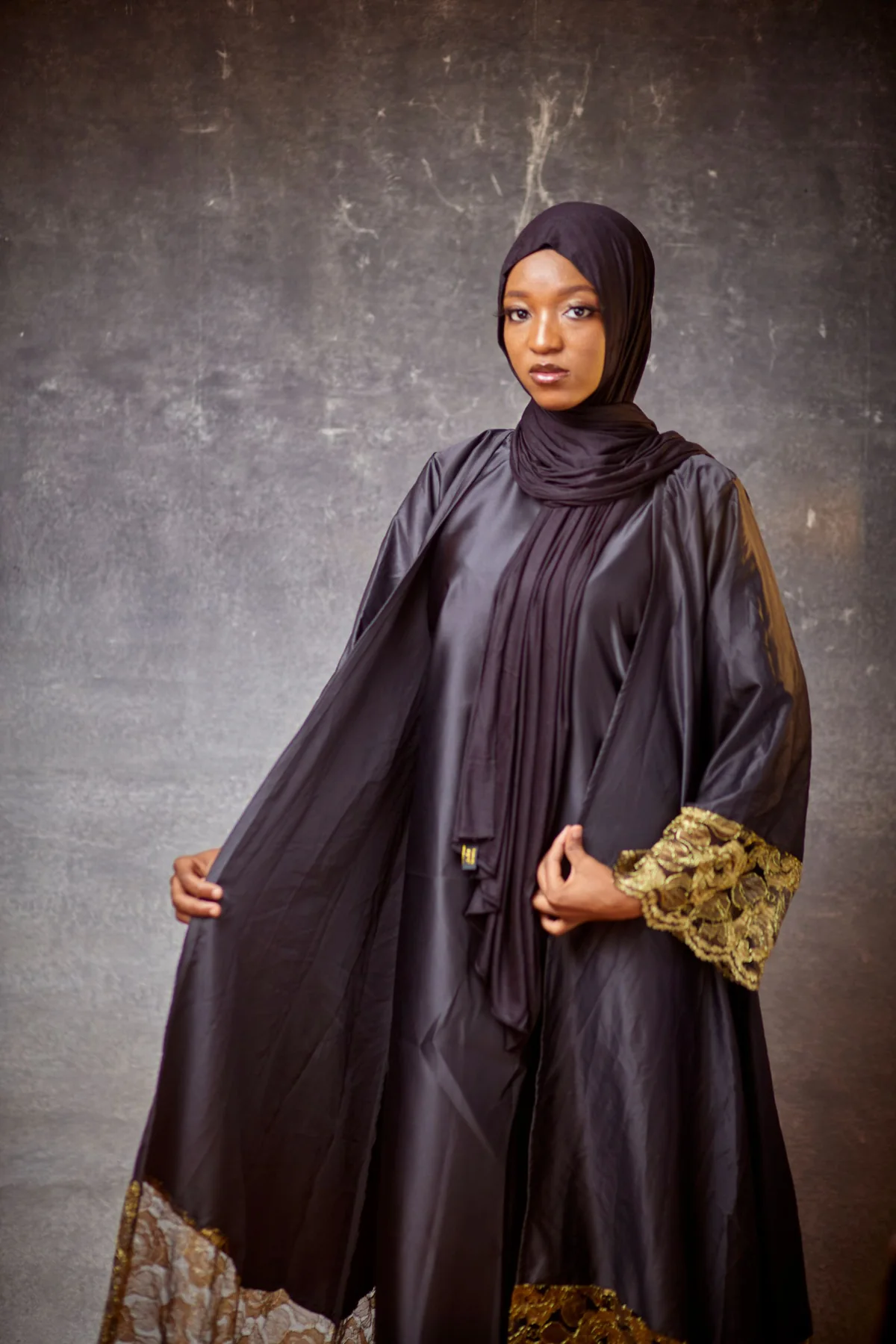
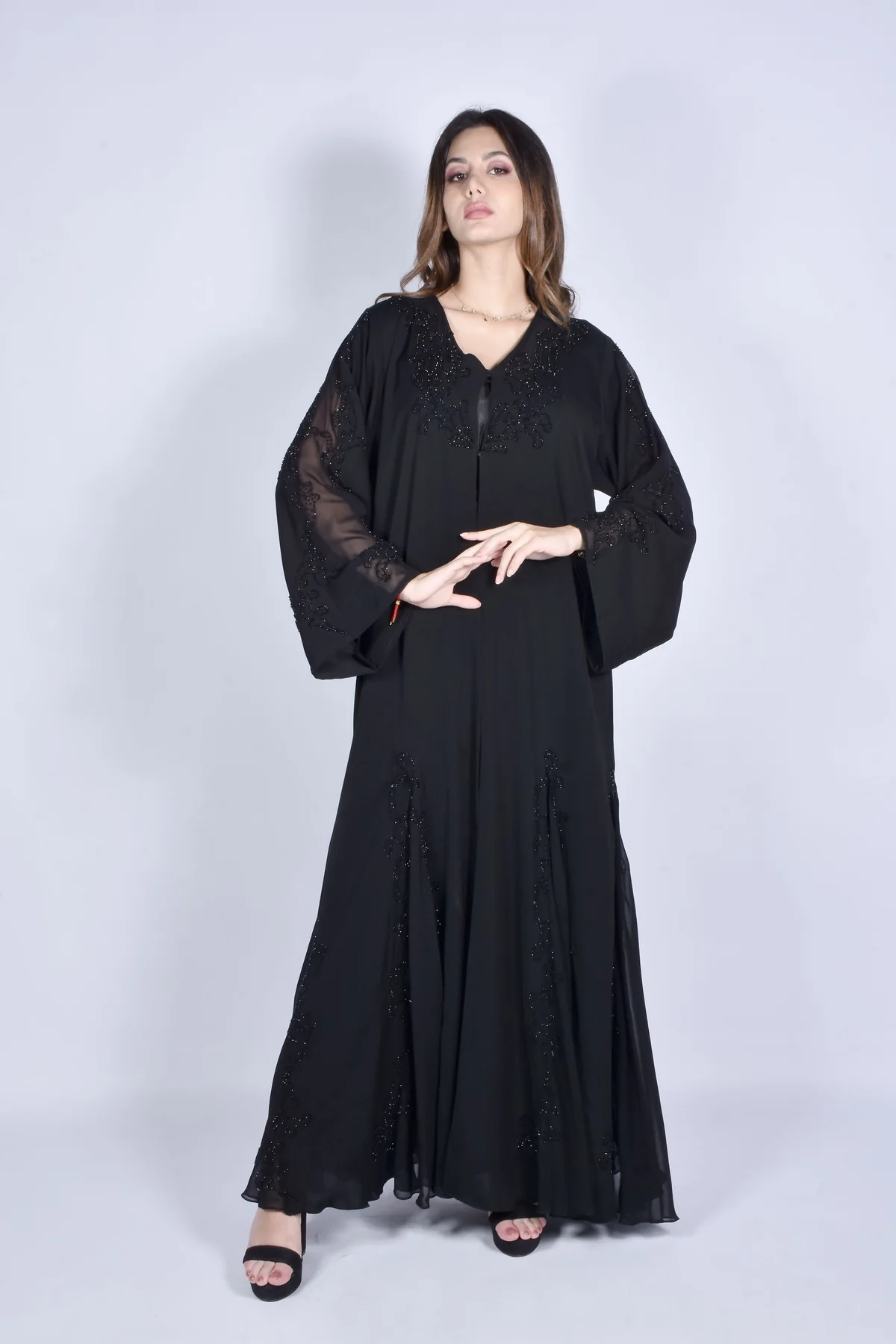
The hero image. Shows the shape, the length and how it falls. A hanger cannot do this, and a flat lay definitely cannot.
Half of what a customer wants to know about an abaya is what it looks like walking away. Almost nobody shoots it.
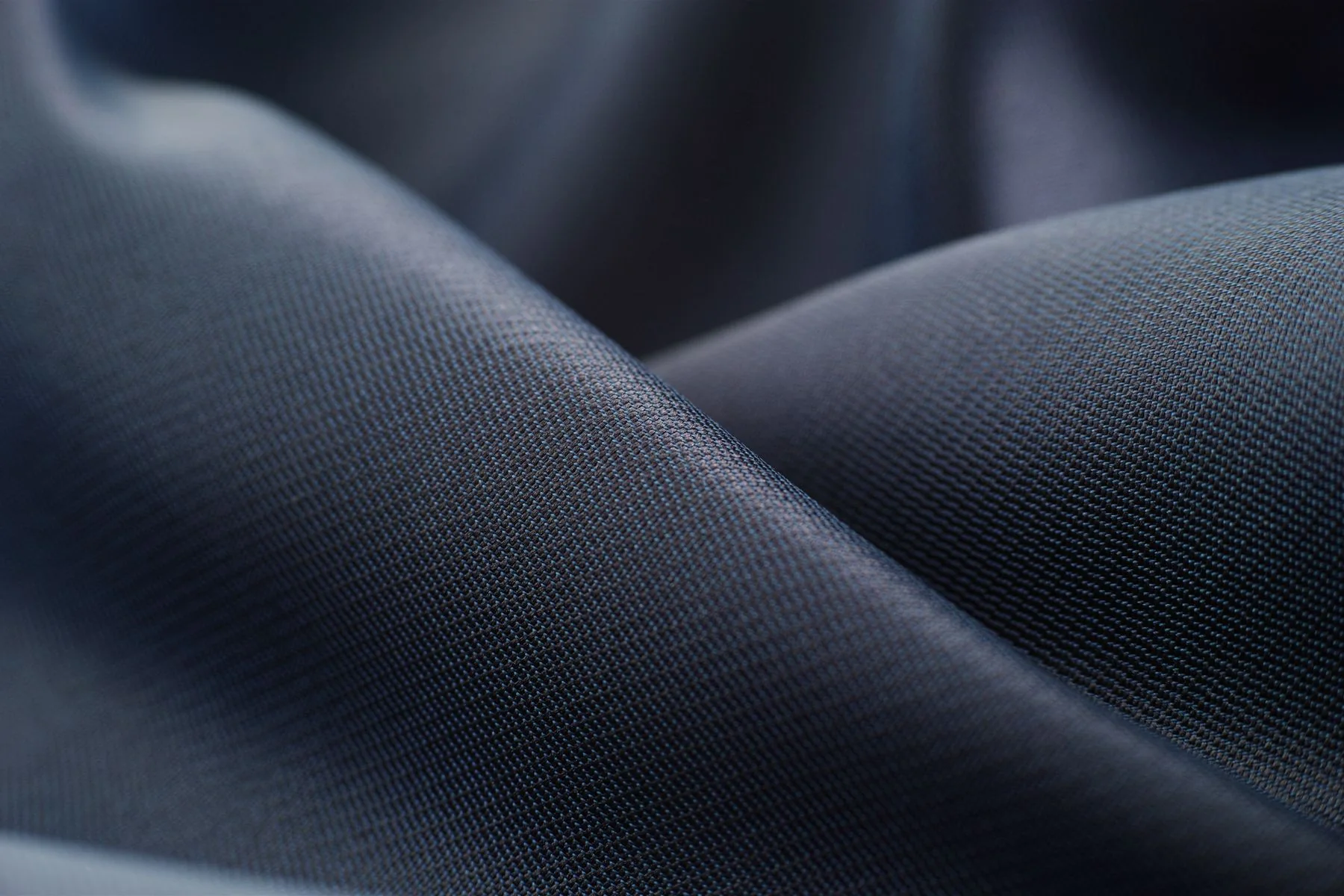
Fill the frame with the cloth, lit from the side so the texture reads. This is the single image that reduces returns most, because it answers the question photos usually dodge.
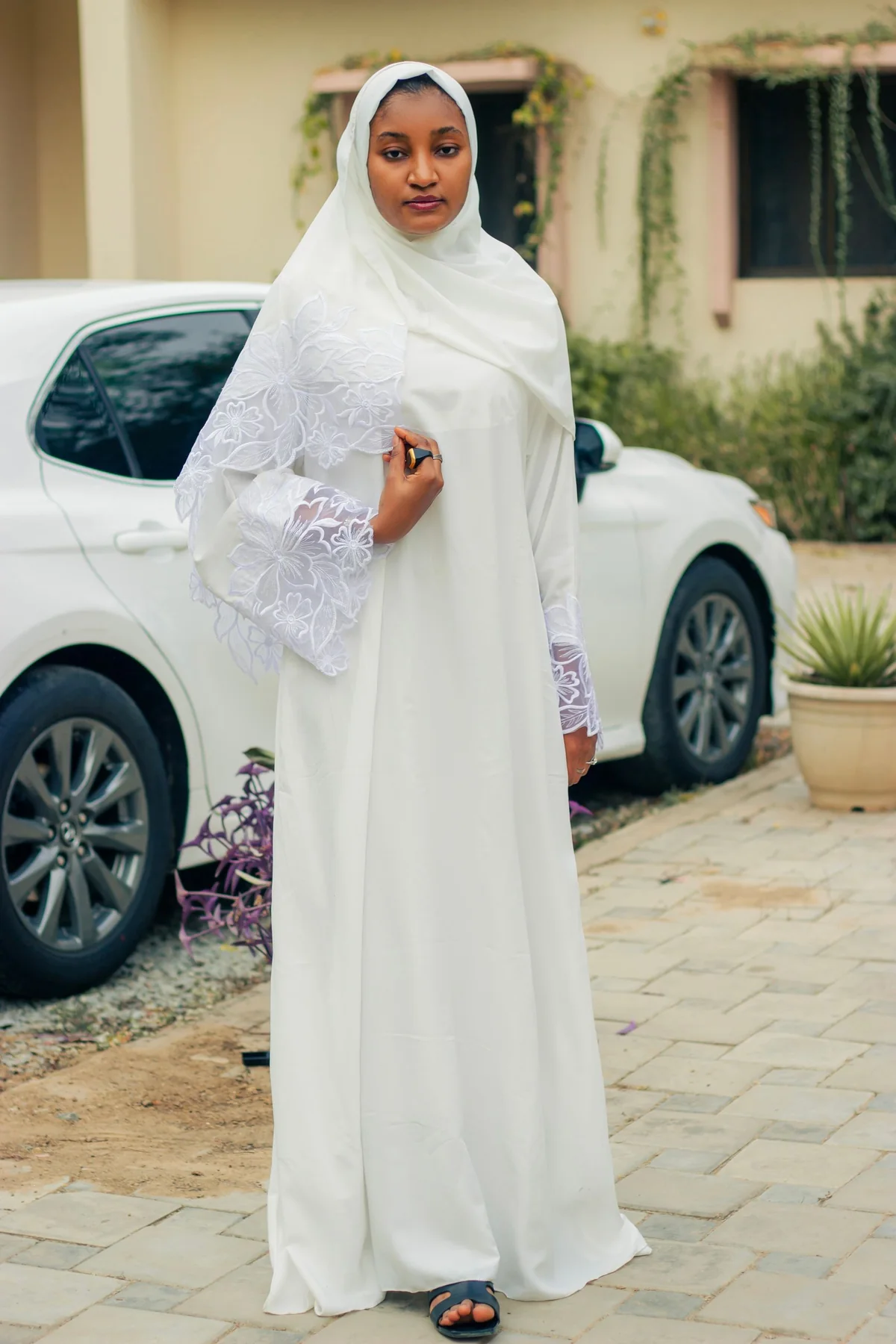
The cuff, the embroidery, the button placket, whatever justifies the price. If there is nothing worth this shot, reconsider the price.
Walking, turning, or arms raised. Drape is most of why one abaya feels expensive and another does not, and it only shows in motion.
The model with her height and the size she is wearing stated on the image or right beneath it. This one piece of information cuts fit returns more than any size chart.
Large window, daylight, no direct sun. Stand the model a couple of metres back from a plain wall so she is not casting a shadow on it.
Use a phone. Modern phone cameras are far better than most new brands believe, and a well lit phone photo beats a badly lit studio one every time.
Shoot everything the same way. Same wall, same time of day, same distance. A consistent set of adequate photographs looks far more professional than a mixed set of good ones.
Shooting black on black. The garment disappears and the customer cannot see the cut.
Heavy editing that changes the colour. The abaya arrives looking different, and that is a return plus a bad review.
Only shooting the statement pieces. Your plain everyday black is what most people will buy, and it deserves the same six photographs.
Most abaya returns are a fit surprise rather than a quality complaint, which means most of them are preventable with information you already have.
This is the part where almost every abaya store gets it wrong, and the fix is not complicated.
Abaya sizing runs on length, 52 through 60, measured down the centre back. The problem is that in standard grading width increases with length, so the sizes assume tall people are also wider.
A tall, slim customer sizes up for the length and gets something too wide. A shorter, fuller customer sizes up for the body and ends up standing on the hem. Both send it back, and both blame the brand rather than the system.
On every product page, give the length and the body measurements for each size. Chest, waist and hip against each length, taken from the real garment.
We send you those numbers per style. Very few abaya stores publish them, which means doing it is both easy and a genuine advantage.
Six things, and they take an hour to add.
Most people do not know how to measure themselves for an abaya and will guess. A two line instruction, measure from the top of the shoulder to where you want the hem to sit, prevents a surprising number of returns.
Better still, tell them to measure an abaya they already own and like, laid flat. It is easier and far more accurate than measuring a body.
A launch is not the hard part. Week six is the hard part, when your best seller is gone and the rest of the rail is still there.
Fewer than eight looks like a page rather than a shop. More than twelve is unmanageable while you are also learning to pack parcels and answer messages.
Each one needs its six photographs and its measurements, which is real work. Twelve products is about forty eight images and a day of shooting.
Order first, then build during the 12 to 18 working days of production. Most new sellers do it the other way round and spend three weeks looking at a finished website with nothing to sell.
Use stock photography or sample images as placeholders, then swap them for your own once the goods land. Do not launch on placeholders.
Pre-selling goods that are still in transit is how a new store destroys its reputation in its first month. Customs holds happen, couriers lose things, and a refund to your first fifty customers is a very hard start.
Wait until it is on your shelf. The extra week costs you less than the reviews would.
Decide now what you will do when a style sells out. Ready stock leaves here in 3 to 5 working days and made to order takes 12 to 18, so the answer depends on which style it is.
Tell us at your first order which designs you expect to chase and we will hold fabric. It costs nothing and it is the difference between a second month of sales and an apology page.
The parts that touch the product. We will tell you plainly where to spend money elsewhere.
Shopify for most, WooCommerce if you already run WordPress. An honest comparison of what each costs you monthly.
Six images per garment, what each one is for, and how to shoot them by a window with a phone.
From the garments we made for you. This is the single biggest lever on fit returns and we hand it to you.
Fabric composition, weight, care wording and size charts per style, so your pages are accurate rather than invented.
The 8 to 12 designs to open with, chosen against your market and price point rather than what looks best on a hanger.
What to reorder weekly, what to hold, and how to use 3 to 5 day ready stock so your best seller is never gone for long.
Five weeks, running alongside your first stock order rather than after it.
Pick the launch collection and the platform in the same conversation, because one constrains the other.
Place the order now so goods and website land together. A live store with nothing to sell is the worst of both.
Set up the store, payments, shipping rules and policies during the production weeks you would otherwise waste.
Shoot against the shot list, upload with our measurements and specs, build a size guide per style.
Launch once stock has cleared. Watch what sells, restock those in 3 to 5 days, and let the data pick your second order.
We are clear about which parts are free and which are not ours to give away.
Abayas photograph badly if you skip any of these.
The help is worth most to people in one of these positions.
You have never built product pages for clothing and do not know what a size guide needs to contain.
You have an audience and DM orders, and you want a checkout that is not you sending payment links at midnight.
If you already run a store with a buying team, take the product data and skip the rest of this page.
An agency builds you a store. We know what is going in it, because we made it.
Your size guides come from the garments we produced for you, per size, per style. Agencies make these up from a template.
Length and girth are coupled in standard grading, which is why tall slim customers return things. Nobody else tells retailers this.
Written for abayas specifically, because a black floor-length garment is genuinely hard to photograph and no one publishes how.
Range, photos and listings planned against what you actually bought and can actually restock.
We are not selling you monthly hours, and we will tell you plainly where to spend money elsewhere.
Four things and the launch plan more or less writes itself.
Country, customer, and the price a garment needs to retail at.
Logo, domain, an audience. It changes the order things should happen in.
You, a freelancer or an agency. We supply the product side to whoever it is.
Ideally tied to a season. Ramadan and Eid shape this calendar more than anything else.
Asked before every launch we have helped with.
No. We are a manufacturer and we will not invoice you for something outside our trade. We help with the range, the specs, the photography direction and the sequencing, and we will point you at people who build well.
Shopify for most first stores, because payments and shipping work straight away and you maintain nothing. WooCommerce if you already run WordPress and have someone to look after it.
Budget for a monthly platform fee, a domain, and payment processing of roughly two to three per cent of each sale. That is the floor. Apps and themes add up fast, so start without them.
Three to five weeks if you build it while your stock is in production. Much longer if you wait for the goods to arrive first, which is what most people do.
No. A free theme with good photographs beats an expensive theme with poor ones, every time. Spend the money on photography instead.
Products, shipping and returns, contact, and an about page with a real face on it. Nothing else matters for your first hundred orders.
Six minimum: full length front, back, fabric close-up, detail, movement, and a scale shot with model height and size worn.
Yes, and plenty of good brands do. A well lit phone photo by a window beats a badly lit studio photo. Consistency matters more than equipment.
Black absorbs light, so the camera loses the cut and the texture. Light from the side rather than the front, avoid a black background, and always include a fabric close-up.
For the full length and movement shots, effectively yes. An abaya on a hanger tells a customer almost nothing about how it falls, and drape is most of what they are buying.
We can arrange it here while your stock is with us, quoted per style. Or take our shot list and hand it to your own photographer, which is free.
For catalogue styles, usually yes. Bear in mind every other buyer of that style can use them too, so your own photography is what makes your shop look like a brand rather than a reseller.
Lightly. Correct the brightness, do not change the colour. A garment that arrives a different shade from the photo is a return and a bad review at the same time.
Publish real garment measurements per size, show the fabric close up, and state the model height and the size she is wearing. Most abaya returns are fit surprises, not quality complaints.
Because in standard grading width increases with length. They size up for the length and get something too wide. Publish chest and hip against each length so they can see it before they order.
Garment measurements. A customer can lay an abaya they already own flat and compare. Body measurements ask them to guess at ease allowance, and they guess wrong.
From us, per style and per size, from the garments we made for you. Ask and we send them.
Two lines. Measure from the top of the shoulder to where you want the hem to sit. Or measure an abaya you already own and like, laid flat, which is easier and more accurate.
It varies by market and channel, and anyone quoting you a single number is guessing. Plan for it to be real, and treat every return as a note about your size guide.
Eight to twelve. Fewer looks thin, more is unmanageable while you are also learning to pack parcels and answer messages.
Around 20 to 60 pieces, split across those products however you like, from AED 90 a piece. The order also has to reach AED 2,000.
Build the store during production, absolutely. Take orders before goods have cleared customs, no. Pre-selling stock in transit is how a new store ruins its reputation in month one.
Ready stock leaves here in 3 to 5 working days, made to order takes 12 to 18. Tell us at your first order which styles you expect to chase and we will hold fabric for them.
Only with an honest dispatch date on the page. A back-order that is clearly labelled is fine. A silent one is not.
Sell-through, not opinion. Whatever sold more than half its stock in the first six weeks gets reordered deeper. Whatever did not gets discounted and dropped.
Either charge a flat rate you can live with, or build it into the price and offer free shipping. Do not do both badly. Surprise shipping costs at checkout are the most common reason a cart is abandoned.
Not at the start. Returns on clothing are expensive and a new brand cannot absorb them. Be clear and fair rather than generous and broke.
Simply and consistently. A clean mailer, tissue, and a card with care instructions. Elaborate packaging looks lovely and eats margin you need for restocking.
No. We ship wholesale orders to you and you fulfil your own customers. It means you see the quality before they do, which is the right way round.
Whatever your market actually uses. Cards everywhere, plus the local wallet or buy-now-pay-later option that is normal where you sell. Ask three customers rather than guessing.
Yes. No retainer and no obligation to order. We would rather your store worked, because a store that works reorders.
We give you the accurate part: fabric, weight, composition, measurements and care. The voice should be yours, because that is the bit customers come back for.
Not currently. Ready stock availability is something you ask us about and we answer quickly. If that ever becomes a real blocker for you, tell us.
You can say your abayas are made in the UAE, because they are. We would ask you not to present our production photos as your own workshop, which is a line some brands cross and customers eventually notice.
Spending three weeks on a website before ordering any stock, then launching with placeholder photos and nothing to sell. Order first, build during production.
Tell us your market, your budget and your date. You get a launch range, a shot list, the measurements for your size guides and a stock plan that lands when the site does.