
( 06 ) · finish
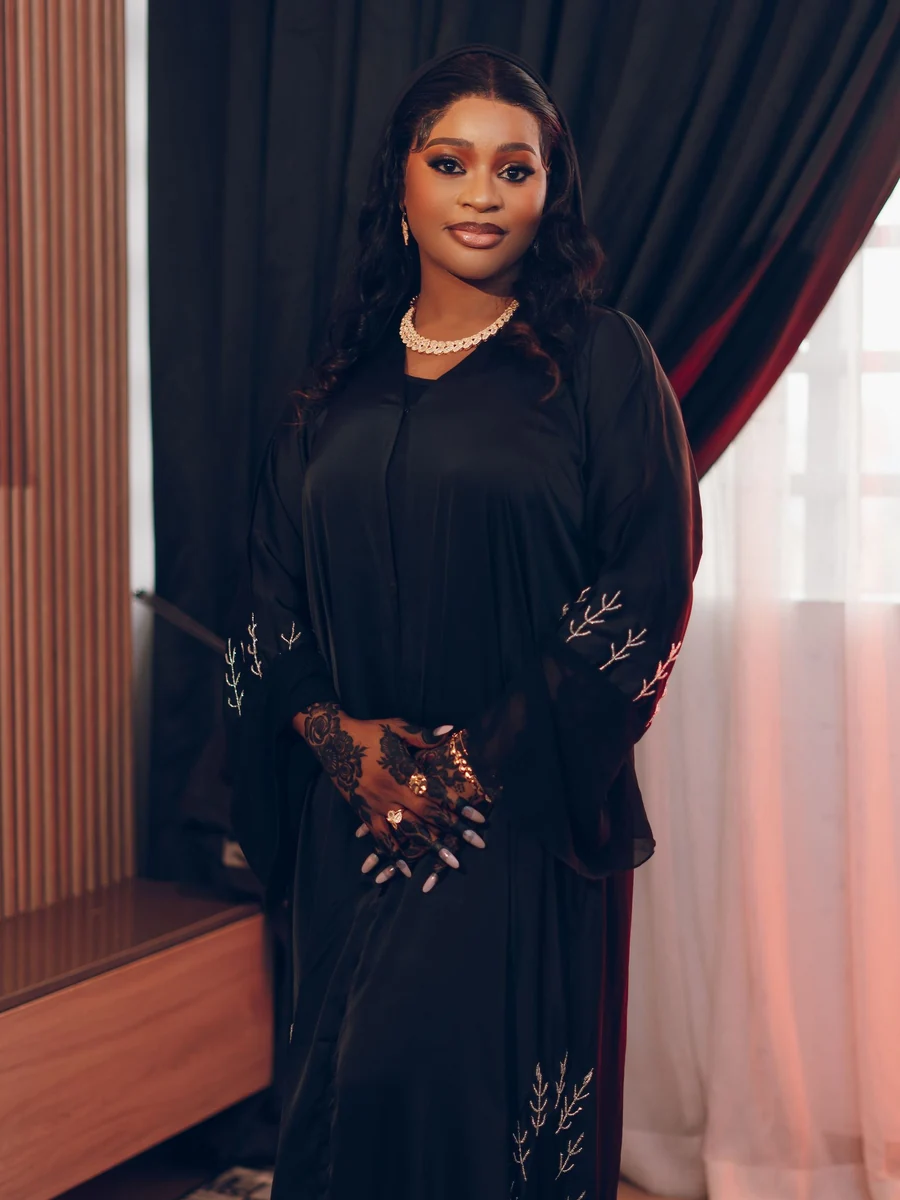
Wholesale embroidered abayas
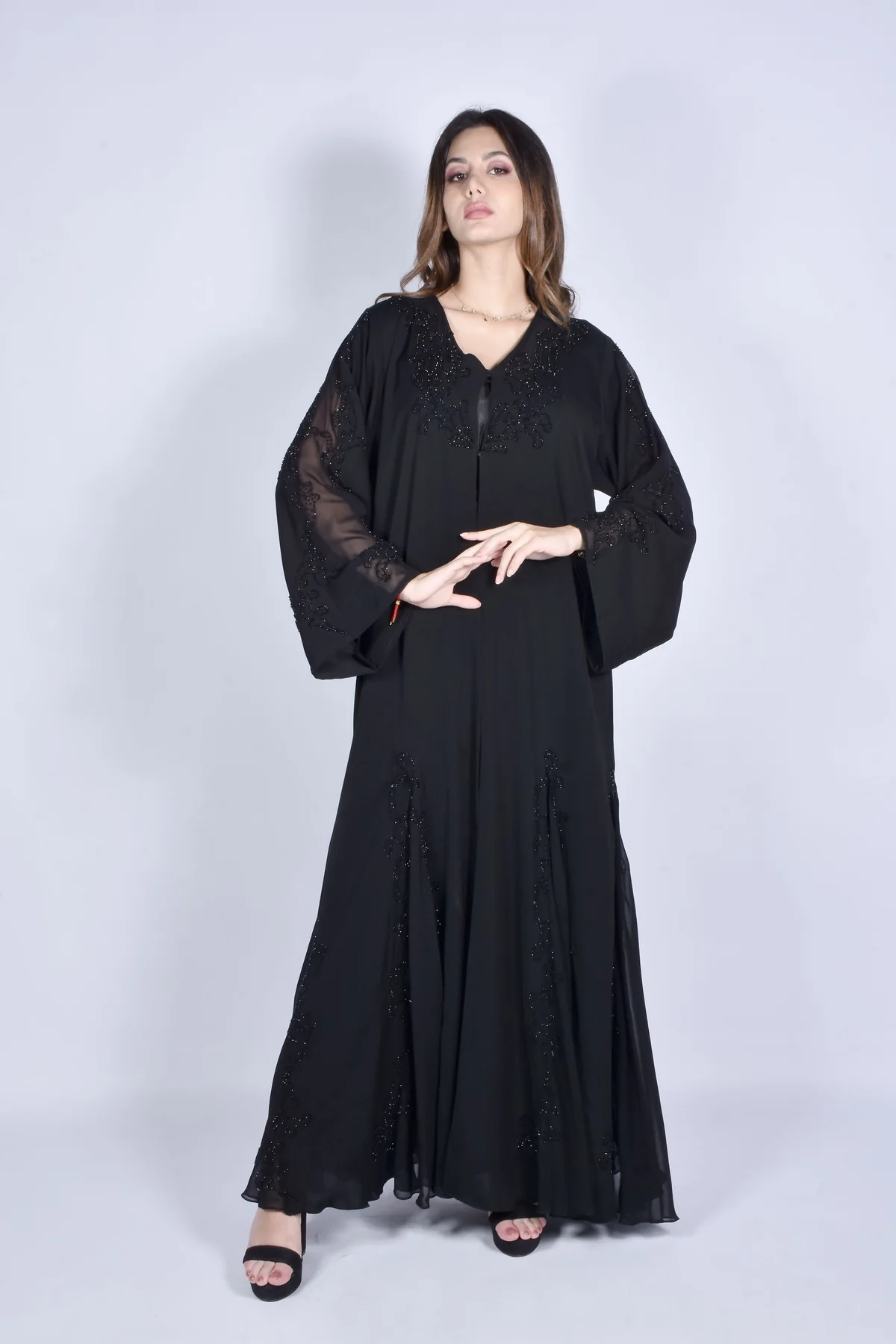
Machine and hand embroidery, beadwork and stone setting, priced by placement so you can see what each addition costs. Your own artwork goes through the same production. 20 pieces in any mix, made in the UAE.
In short
Machine embroidery is stitched by a programmed machine: fast, even and repeatable, and the right choice for logos and repeating patterns. Hand embroidery is stitched by a person: slower, dearer, and slightly different on every piece. Both should be pull-tested before bulk, because embellishment that lifts under a firm tug will not survive a season.
- Techniques
- Machine, hand, beads, stones
- Priced by
- Placement, not per garment
- Minimum
- 20 pieces, any mix
- Your artwork
- Made to spec
Embroidery is quoted per placement
Send your artwork or a reference photo and tell us where you want it. We will quote the placement, have it stitched on a sample, and pull-test it before anything goes into bulk.
Prices and terms reviewed September 2026
Why buyers pick embroidered
Priced by placement, not by guess
A cuff costs less than a full front panel. You see what each addition costs, so you can design to a shelf price instead of hoping.
Your artwork, made to spec
Your artwork goes through the same production as our own designs. That makes private label embroidery possible from your first order rather than at some later volume.
Pull-tested before bulk
Beadwork that lifts under a firm tug is a return waiting to happen. We test the sample and we would rather it failed here.
Machine, hand, beads or stones
Four ways to decorate a garment, with very different costs and very different failure modes.
| Technique | What it is | Costs | Watch for |
|---|---|---|---|
| Machine embroidery | Stitched from a digitised file | Lowest, repeatable | Puckering on thin cloth |
| Hand embroidery | Stitched by a person | Highest, charged by the hour | Natural variation piece to piece |
| Beadwork | Beads sewn on individually | High, and adds real weight | Threads lifting, beads shedding |
| Stone setting | Stones fixed to the surface | Varies with stone and density | Adhesive failing in the wash |
Ask for a pull test on any beadwork or stone sample, and wash it once. Both take minutes and both predict what happens after your customer has worn it twice.
Which technique for which job
The decision is usually cost against character. Machine work is consistent and cheaper; hand work is irregular in the way people pay for.
Machine embroidery
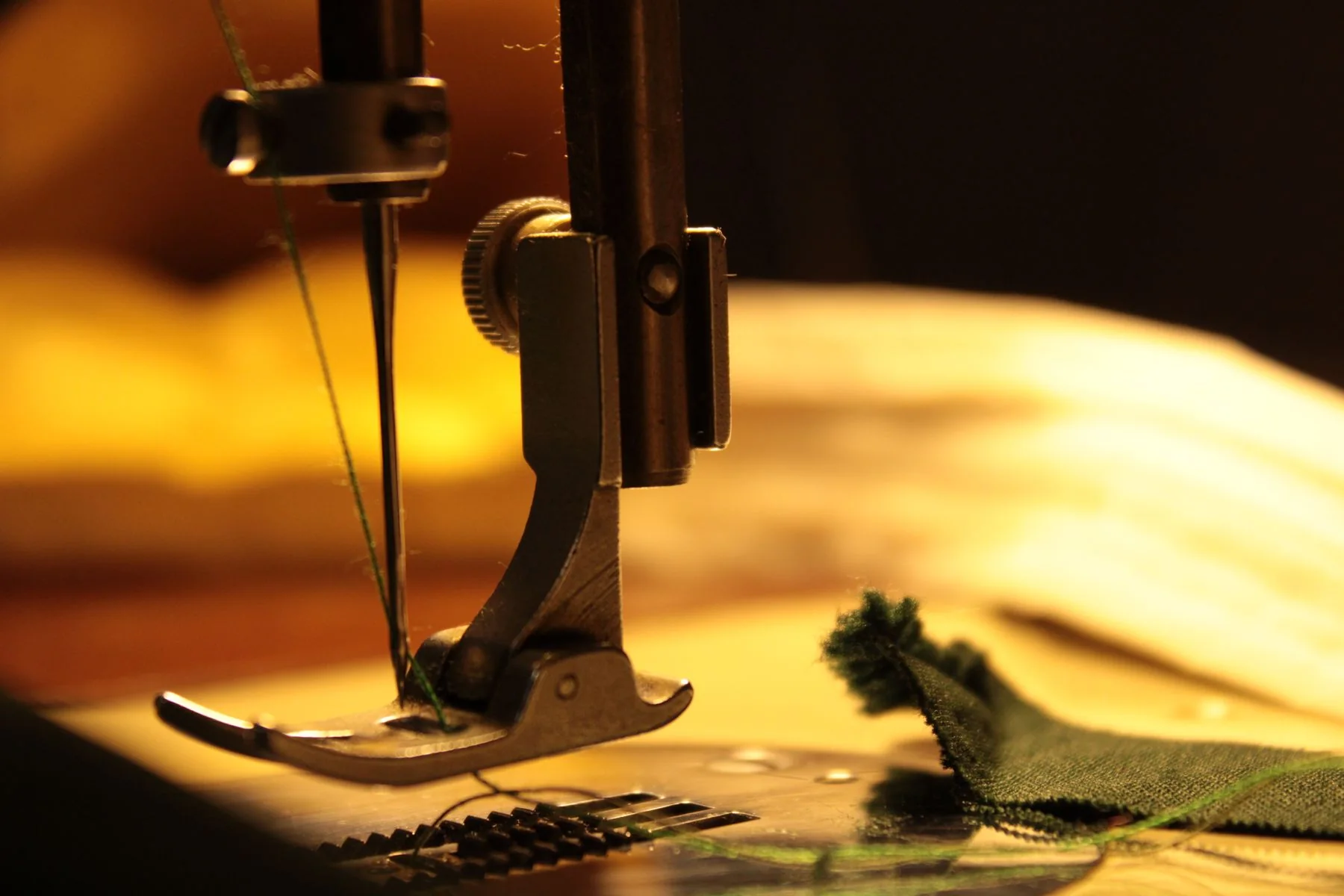
Your artwork is digitised into a stitch file, and the machine repeats it exactly on every piece. That is what you want for a logo, a repeating border or anything that has to look identical across three hundred garments.
It is also the cheapest way to get your brand onto a garment permanently, which is why it pairs so naturally with private label.
Hand embroidery, beads and stones
Hand work is slower and charged as labour, and no two pieces are quite identical. For an occasion range that is a feature rather than a fault.
Beads and stones add real weight to a garment. That matters for hot markets and it matters for freight, since a heavily beaded abaya costs more to ship than a plain one.
Making sure it survives the customer
Embellishment failing is one of the most expensive faults in this trade, because it usually shows up after the customer has worn the garment, not on arrival.
The pull test
Take the sample and tug firmly at the embroidery and at any beadwork. If threads lift, if beads come away, or if the stitching distorts the cloth around it, reject it.
We run this before bulk and we would rather you ran it too. It takes ten seconds and it is the single most useful check a buyer can make.
Wash the sample as well
Adhesive-set stones are the usual casualty. One wash at the temperature your customer will actually use tells you more than any specification.
The base fabric matters
Stitching pulls at the cloth it sits on. A stable base like crepe supports dense work without puckering; a very light fabric will show every stitch as a ripple.
If you have chosen a light cloth and heavy embroidery, one of those two decisions needs to change, and we will tell you which one we would move.
Questions buyers ask
Do you do hand embroidery or machine embroidery?
Both, along with beadwork and stone setting. Which one suits you depends on the look you want and the price you need to hit.
What is the difference between hand and machine embroidery?
Machine embroidery runs from a digitised file and repeats exactly on every piece. Hand embroidery is stitched by a person, costs more, takes longer, and varies slightly piece to piece.
How much does embroidery add to the price?
It depends on the size of the placement, the stitch density and the technique. A small cuff motif is a different cost from a full front panel, so we quote by placement rather than adding a flat percentage.
Where is embroidery usually placed on an abaya?
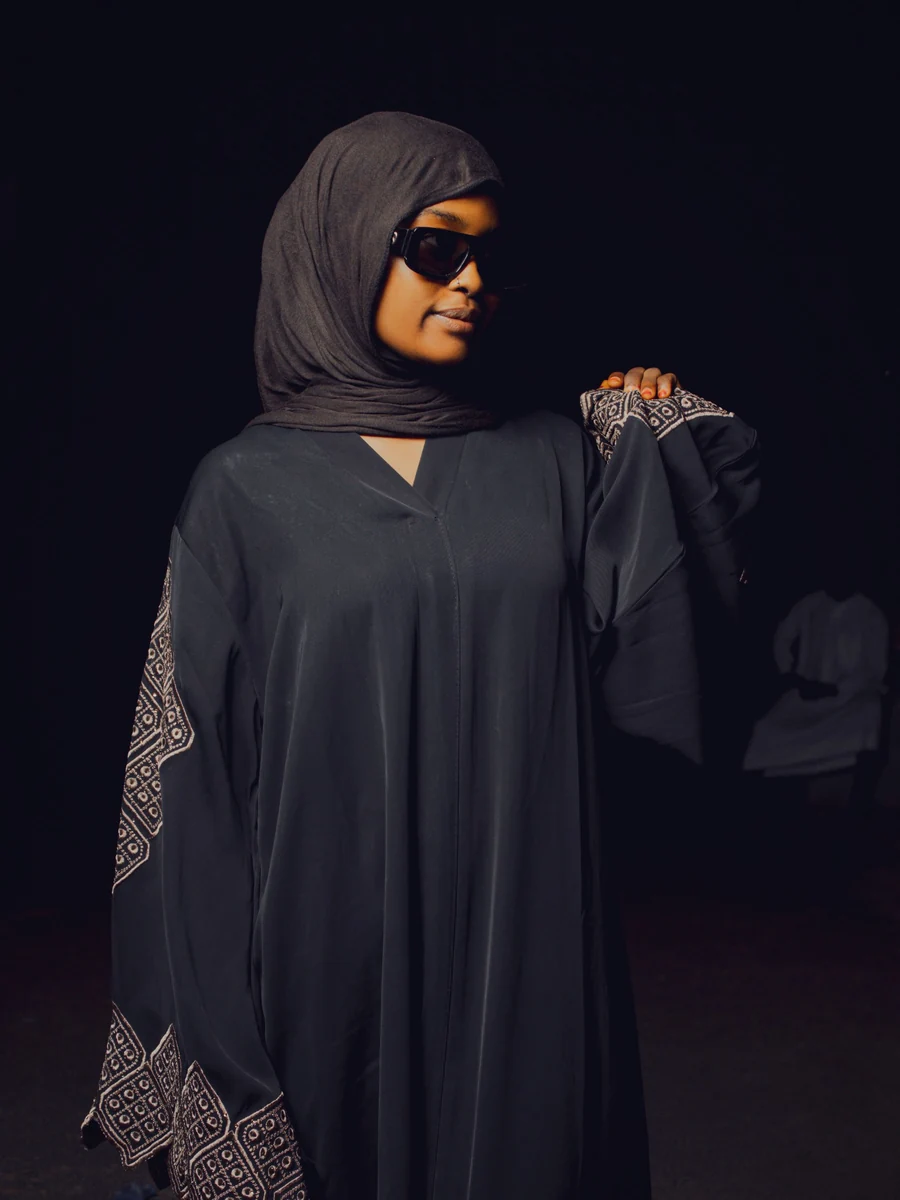
Sleeve cuffs, hem, neckline and the front panel are the most common. All-over patterns are possible and cost considerably more.
Can I send my own logo or design to be embroidered?
Yes. Send the artwork and we will quote the placement and the price. That is the same route as private label, through the same production.
What file format do you need for custom embroidery?
Vector artwork is best, so .ai, .eps or .svg. We can work from a high resolution image for simple shapes, but fine detail needs clean outlines to digitise properly.
How do you make sure embroidery does not come loose?
We pull-test the sample before bulk: a firm tug at the stitching and at any beadwork. If anything lifts, the design or the backing changes before we run it.
What is a pull test?
Exactly what it sounds like. You pull at the embellished area to see whether the stitching holds. Ten seconds, and it predicts most embellishment failures.
What is beading or stone work?
Beads sewn on individually, or stones fixed to the surface, usually on occasion pieces. Both add weight and both need testing before bulk.
Is a beaded abaya heavier to wear?
Noticeably. If you are buying for a hot market, keep dense beadwork for occasion pieces and leave everyday styles light.
What is the difference between embroidered and printed abayas?
Embroidery is stitched into the cloth and has texture you can feel. Print sits on the surface. Print is cheaper and flatter; embroidery reads as more expensive because it is.
Does embroidery make an abaya harder to wash?
It needs more care. A gentle cycle, inside out, and no wringing. Say so on your product page, because most embellishment complaints start in a washing machine.
What fabric works best under embroidery?
A stable base like crepe. It supports dense stitching without puckering. Very light fabrics ripple around heavy work.
What is the minimum order for embroidered abayas?
20 pieces across the whole order, any mix of styles, colours and techniques, with a AED 2,000 minimum value.
Can I mix embroidered and plain abayas in one order?
Yes, and it is the sensible way to buy. Keep your depth in plain everyday pieces and use embroidery for the styles that draw people in.
How long does an embroidered order take?
12 to 18 working days made to order. Dense hand work and heavy beading take longer, and we will tell you the real date at quoting.
Can I get a sample of an embroidered design before bulk?
Yes. Sample orders need no piece minimum, only a AED 2,000 order value. Pull-test it and wash it before you approve the run.
Buyers also look at
The rest of the range
- 01NidaThe everyday fabric
- 02Open abayaBest seller in the US, UK and EU
- 03Kimono abayaHighest-searched silhouette
- 04CrepeTravels without creasing
- 05Plus sizeGraded from a plus block
- 06EmbroideredYour artwork, made to spec
- 07Closed abayaFull coverage cuts
- 08Butterfly and batwingPhotographs well
- 09FarashaFor Ramadan and occasions
- 10LinenFor hot climates
- 11LuxuryLined and hand-finished
- 12Prayer dressOne-piece and two-piece
- 13Umrah and HajjWrinkle-resistant travel sets
- 14KidsMother and daughter sets
- 15HijabsMatched dye lots