A written standard per style
Measurement points, tolerances, stitch types and trim placement, agreed before production rather than judged after it.

A measurement sheet you can hold us to, checks during the run rather than only at the end, photographs as your order is made, and photos of every carton before you pay the balance.
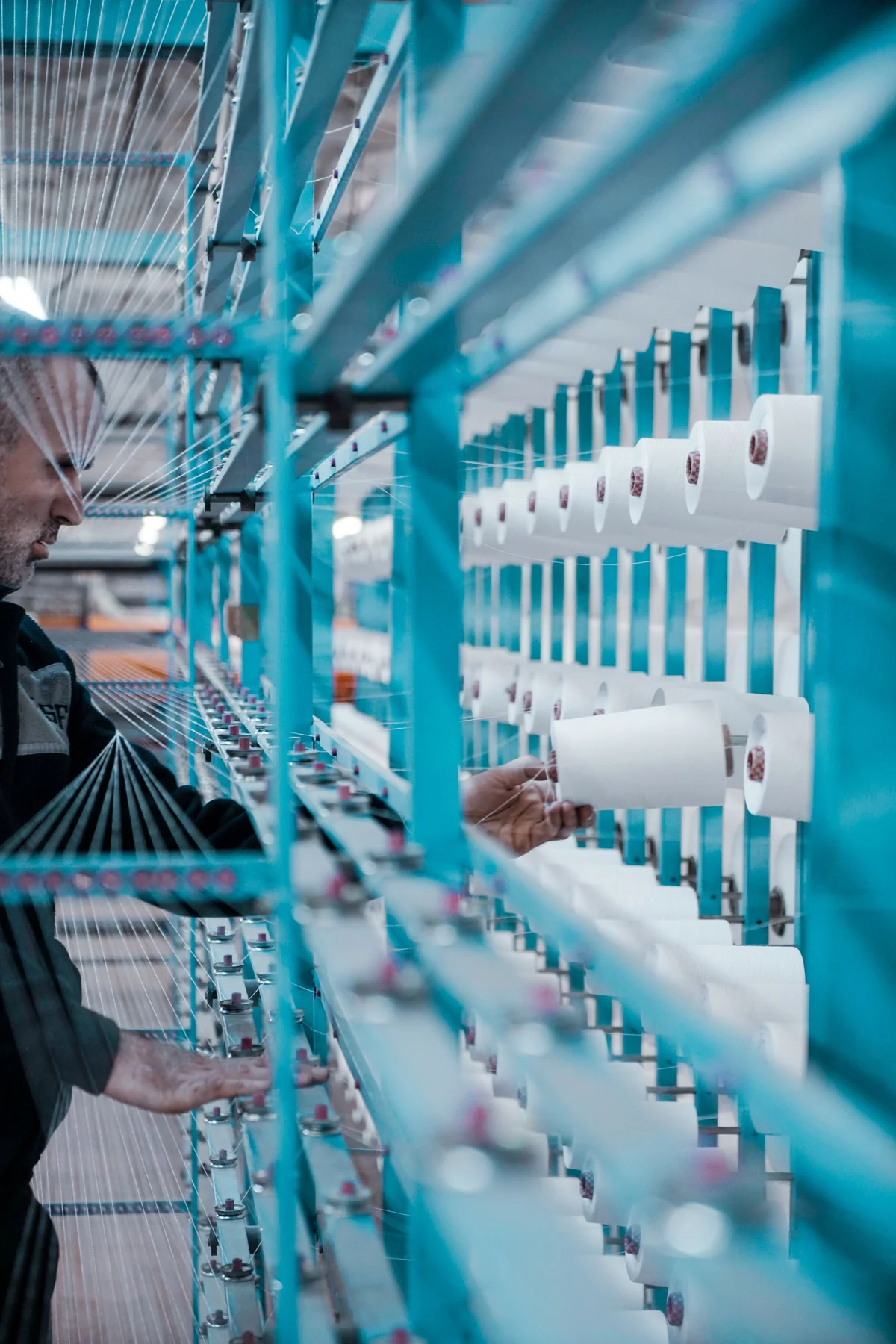
Fabric, cutting, inline, final.
Published per style, per measurement point.
Packed and sealed, before dispatch.
From delivery, with photographs.
Every abaya supplier says it checks quality. Almost none of them publish what they check, what tolerance they hold, what counts as a defect, or what happens when a batch fails. That gap is the whole reason this page exists.
Inspection companies publish excellent standards and cannot make you an abaya. Abaya suppliers will make you an abaya and publish no standards at all. We would rather do both.
You cannot inspect against a feeling. Before anything is cut, there is a written sheet saying what the garment should measure, what stitch goes where, and how much variation is acceptable.
You get a copy of that sheet. It is the thing that turns a disagreement about whether an abaya is acceptable into arithmetic, and arithmetic is much easier to settle than opinion.
No two garments off a line are identical. Fabric moves, operators vary, and a tolerance is the honest admission of that. What matters is that the number is agreed in advance rather than argued about afterwards.
These are the points we measure on a standard abaya and the variation we hold. They are published per style, and where a fabric or a cut needs a wider tolerance you are told before you approve the sample rather than after you receive the run.
Measured flat, on a table, with the garment relaxed.
It means a garment measured inside that range is a pass and one outside it is a fail. Not "roughly" and not "near enough".
It also means you can check us. Get a tape out when your order lands, measure three pieces, and compare them with the sheet we sent. If the numbers do not agree, that is a conversation with a clear answer rather than a difference of opinion.
Length is the size. A customer buying a 56 is buying a specific measurement, not a vague medium, so a garment 3cm short is not slightly off, it is the wrong size.
This is also why abaya returns are so often about fit. Publishing real garment measurements on your own product pages is the cheapest way to cut that, and we give you the numbers to do it.
The other half of a standard is agreeing what a fault is. The trade sorts them into three groups by how much they matter to the person wearing the garment.
The class decides what happens to the piece, not how annoyed anybody is.
Makes the garment unsafe or unsaleable, or breaks a legal requirement. A broken needle left in a seam. A missing or wrong care label in a market that requires one. These are never acceptable at any quantity.
A customer would notice and would return it. Measurements outside tolerance, obvious shade variation between panels, a broken zip, skipped stitching in a visible seam, embroidery pulling away, a hole or a stain.
Falls short of the standard but would not normally cause a return. A loose thread end, very slight puckering on an inside seam, a label a couple of millimetres off centre.
AQL is the sampling rule that decides how many pieces get checked out of a batch and how many faults are allowed before the batch fails. It exists because measuring every garment on a run of three thousand would cost more than it saves.
We work to a 2.5 AQL on major defects and zero on critical ones, which is the normal standard for clothing at this level. In plain terms: critical faults fail the batch outright, and majors are allowed only in very small numbers before the whole batch is pulled and reworked.
If your own buyer requires a tighter level, tell us at booking. It is achievable and it costs more, because it means slower lines and more checking, and we would rather quote that honestly than agree to it and not do it.
Final inspection on its own is the cheapest kind of quality control and the least useful. By the time you find a systematic fault at the end, every piece has it.
Four stages, each with something written down at the end of it.
Rolls are checked for flaws, shade consistency and width before they reach the cutting table. A roll with a problem is rejected there, which is the cheapest possible moment to find it.
This is also where dye lots are confirmed, so a run does not quietly get cut from two slightly different blacks.
Pattern pieces are checked against the approved sample before the line starts, and the first finished garment is measured against the sheet and signed off.
Most systematic faults are born here. A pattern piece placed wrong produces three thousand identical problems.
Pieces are pulled and measured at intervals through production, and corrections go back to the line immediately.
This is the stage most factories skip, and it is the one that saves both of us money. A drift caught at forty pieces costs an hour. The same drift caught at the end costs a batch.
Finished pieces are inspected and measured against the written standard on an AQL sample, the pass rate is recorded for your order, and every carton is photographed packed and again sealed.
The records are yours on request, and the carton photographs double as your evidence if a transit claim is ever needed.
This is the question inspection companies decline to answer and factories avoid putting in writing. Here is our position, plainly.
Where the fault is ours, the rework is ours. Pieces are remade or credited, and we do not invoice you for fixing our own mistake.
Anything that does not match the approved sample or the written measurement sheet. Stitching faults, measurements outside tolerance, wrong labels, wrong fabric, shade variation we failed to flag, damage that happened here.
A garment that matches the spec you approved but does not suit your customers. A fabric you chose against our advice. Damage in transit, which is a carrier claim and which we will run for you with our packing photographs.
We would rather be clear about this than pretend everything is covered and then argue when it matters.
Photograph the problem and tell us within seven days of delivery. Include a few pieces, not one, so we can tell whether it is an isolated fault or a batch problem. The two have very different answers.
The single biggest fear in this trade is paying a deposit to a supplier you cannot see. It is a reasonable fear, and the answer is evidence at every stage rather than a promise.
A sample order is real stock you keep and sell. It shows you our quality, our packing and whether we hit the date we published, before you commit to a full run.
We send photographs as your order is made, then photos of your packed cartons before you pay the balance. Your spec sheet is in writing, so you can check every photo against it.
If something is wrong after delivery, tell us within seven days with photographs. Where the fault is ours, the pieces are replaced or credited.
Every order is inspected against your spec sheet before it is packed. You get photographs of the finished pieces and of the packed cartons, and the balance is due only after you have seen them.
If you want certainty before a large order, place a sample order first: it is real stock, measured and checked the same way.
Not a slogan on a homepage. Documents and checkpoints you can hold us to.
Measurement points, tolerances, stitch types and trim placement, agreed before production rather than judged after it.
Rolls checked for flaws, shade and width before cutting. Dye lots confirmed so a run is not cut from two different blacks.
The first garment off the line measured against the sealed sample and approved before the batch continues.
Pieces pulled and measured at intervals, with corrections applied to the line immediately.
AQL sampling against the written standard, and the result recorded against your order.
Packed and sealed, with a manifest. Also your evidence for any transit claim.
Five stages, each producing something written down.
Measurements and tolerances written and signed off with the sample, so "correct" is defined before anyone sews.
Checked for flaws, shade and width. Rejected rolls never reach the cutting table.
Pattern checked against the sealed sample, first garment measured and approved before the batch runs.
Sampled at intervals, corrections applied to the line as they are found rather than at the end.
AQL inspection against the standard, pass rate recorded, cartons photographed, records shared.
Including what happens when we get it wrong.
The stages where quality is decided rather than discovered.
Usually the buyers who have been caught out once already.
You have had a run arrive short, off-measure or the wrong shade, and been told it was within normal variation.
You answer to a quality process of your own and need records you can file, not reassurance you have to pass on.
The bigger the first run, the more a written standard is worth. Ask for it before the deposit, not after the delivery.
Most of this category treats quality as a claim. We would rather it were a document.
Actual measurement points and actual numbers, on this page. No other abaya supplier we looked at publishes any.
Critical, major and minor, with abaya examples, so nobody has to argue about whether a crooked hem counts.
Ours when it is our fault, in writing. Even the big inspection firms decline to answer that question.
Not only at the end, where a systematic fault has already reached every piece.
One company accountable for the whole order. Photographs as your order is made, then photos of the packed cartons before the balance is due.
Quality control needs a definition of correct, and part of it can only come from you.
A physical garment you have signed off. Everything is inspected against it.
Which points matter most to your customer: length, sleeve, chest, hem sweep.
If your market accepts ±1cm, say so. If it does not, say that instead, because it changes the line speed and the price.
Photographs within seven days of delivery. We cannot fix what we hear about a season later.
The uncomfortable quality questions, answered directly.
Plus or minus 1cm on most key measurements, tighter at 0.5cm on shoulder width and sleeve opening, and 2cm on hem sweep because a wide hem naturally varies more. Published per style.
Ask and we will send it for the style you are considering. It is not a secret document and you should be comparing it against other suppliers.
Lay three garments flat on a table and measure centre back length, chest and sleeve. Compare with the sheet. If the numbers disagree, tell us, and it becomes arithmetic rather than opinion.
They can. A stretchy jersey moves more than a stable nida and will need a slightly wider allowance. Where that applies you are told before you approve the sample.
Achievable and it costs more, because it means slower lines and more checking. We would rather quote that honestly than agree to it and quietly not do it.
Yes, and please do. Real garment measurements on your product pages are the cheapest way to cut fit returns, which are most abaya returns.
We sort them into critical, major and minor. Critical makes the garment unsafe or unsaleable. Major is something a customer would return for. Minor falls short but would not cause a return.
2.5 on major defects and zero on critical. That is the normal standard for clothing at this level. A tighter level is possible if you need it and is agreed in writing at booking.
It is the sampling rule that decides how many pieces are checked out of a batch and how many faults are allowed before the batch fails. It exists because checking every piece on a three thousand piece run would cost more than it saves.
Every garment gets looked at during finishing and packing. Formal measurement and defect inspection is done on an AQL sample, which is how the whole trade works.
Four. Fabric before cutting, the first piece off the line, sampled pieces during the run, and a final audit before packing.
Because a systematic fault caught at forty pieces costs an hour of rework, and the same fault caught at the end costs the batch. Final-only inspection is the cheapest kind of QC and the least useful.
On request, yes: the measurement audit and the recorded pass rate for your order, alongside the carton photographs.
It is reworked or remade before it ships. That is the point of catching it here rather than at your warehouse.
We do, where the fault is ours. It is not invoiced back to you and it is not taken out of your next order in some other form.
Photograph several pieces and tell us within seven days. Where the fault is ours the pieces are replaced or credited.
Because one faulty garment and forty faulty garments have very different causes and very different answers. The spread tells us whether it is an isolated slip or a batch problem.
We will say so, and we will help you fix it. A fabric you chose against our advice or a spec you approved is not something we can absorb, but it is something we can work around on the next run.
Your choice, usually. Replacement keeps your range whole, a credit helps your cash flow. Tell us which you need.
Then we have failed badly and we will treat it that way. Stop unpacking, photograph what you have, and call us rather than emailing.
Yes. We send photographs as your order is made, and photos of every carton packed and sealed before you pay the balance.
Order a sample first. It is real stock you keep and sell, and it shows you our quality, our packing and whether we hit our dates, before you commit to more.
Yes, in photographs. We inspect every order against your spec sheet and send you photos of the finished pieces and the packed cartons before you pay the balance.
Measurements against the tolerances on your spec sheet, stitching, finishing, labels and packing. Anything outside the spec sheet is corrected before the order is packed.
Tell us within seven days, with photographs of several pieces. Where the fault is ours the pieces are replaced or credited, and that promise is in writing.
Ask us for the current list rather than trusting a logo on a website. If your buyer requires a specific audit, tell us early, because some take months to arrange.
Rolls are inspected for flaws, shade consistency and width. A roll with a problem is rejected before it reaches the table, which is the cheapest moment to find it.
We buy from one dye lot for a run wherever possible. Where a single lot cannot cover it you are told before cutting, with options, rather than after delivery.
Wash testing on the fabric before bulk, and we would encourage you to wash your own sample too. Shrinkage is a fabric property, so it is much better found before three hundred pieces exist.
Dark dyes can release colour on a first wash. Good cloth is finished to minimise it. Test your sample, and if it bleeds badly tell us, because that is a fabric we should not be selling you.
Pull testing on samples and during the run. If threads lift or beads come away under a firm tug, it fails. We would rather it failed here than on a customer.
They are cycled during finishing. A zip failure is one of the most common reasons a garment comes back, and it is entirely preventable at this stage.
Every one, packed and again sealed, with a manifest of what is inside. You get them before dispatch.
Two reasons. You approve the balance invoice against evidence rather than a promise, and if a carton is damaged in transit the claim becomes a comparison of photographs.
Yes, including carton labelling, polybag requirements and ratio packing. Send the spec at booking rather than at dispatch, because non-compliant cartons get rejected at the other end.
Either. Tell us which your warehouse prefers. Ratio packs suit shops receiving directly, solid cartons suit a distribution centre breaking them down.
Strong daylight, steam one piece, then turn it inside out and check the hem and overlock. Then measure three pieces against the sheet. Fifteen minutes and you will know.
We will send the measurement sheet and tolerance table for the style you are considering, and show you the production and carton photos you get on every order.