When should I place a wholesale abaya order for Ramadan?
For stock on the shelf before Ramadan 2027, which is expected to begin around 8 February 2027, place the final order and clear the deposit 10 to 12 weeks ahead: between 16 and 30 November 2026. New designs need sampling first, so start them three to four months out, in October 2026. Exact dates depend on the moon sighting.
Read the full guide →How do I verify that an abaya supplier is genuine?
A genuine supplier puts its promises in writing and can prove them on your order. Check that the trade licence name matches the invoice and bank account, get the fabric, the minimum and a spec sheet in writing, ask for photos of your order as it is made and of the packed cartons, and order samples before a bulk deposit.
Read the full guide →Is it better to buy abayas from Dubai, China or Turkey?
China is usually cheapest per piece, with marketplace prices from about US$2, but the lowest prices need 100 to 3,000 pieces. Turkey is closest to European buyers, and one Istanbul supplier advertises no minimum. Dubai suppliers make abayas where they are worn every day and take small orders. Compare landed cost, not unit price.
Read the full guide →What is the minimum order quantity for wholesale abayas?
Published minimums for wholesale abayas mostly sit at 10 to 12 pieces on UAE supplier sites. Some Istanbul wholesalers state none; some factories ask 30 per style. What matters more is what the number counts: the whole order, each design, each colour or each size pack. Dubai Abaya's minimum is 20 pieces and AED 2,000 per order, in any mix.
Read the full guide →Is the abaya business profitable?
Yes, for shops that price from landed cost rather than the supplier's price. Halal Times sets a target abaya margin of 50% to 70%. In a worked example with illustrative costs, a 70% margin on the invoice falls to about 55% once freight and duty are paid, and about 39% after fees, returns and post-Eid discounts.
Read the full guide →What are the different types of abayas?
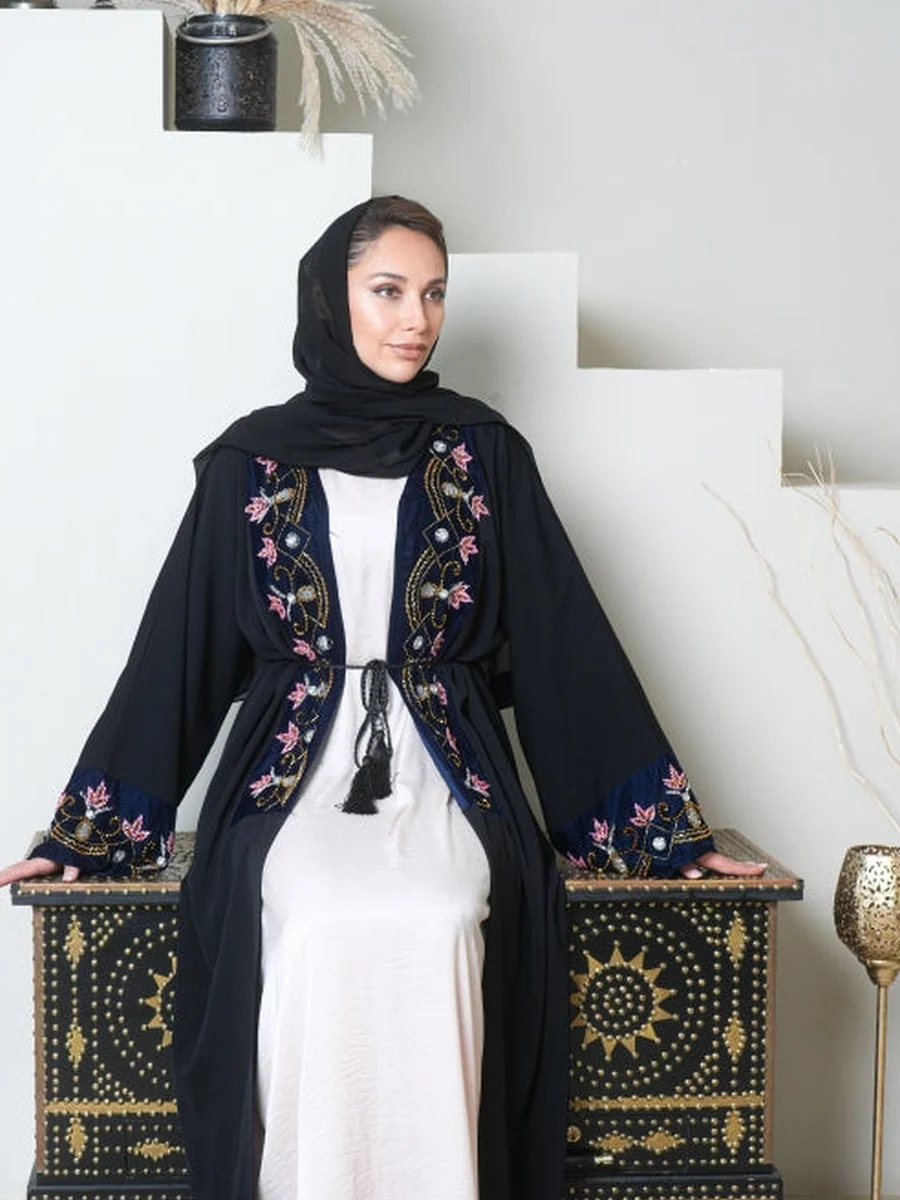
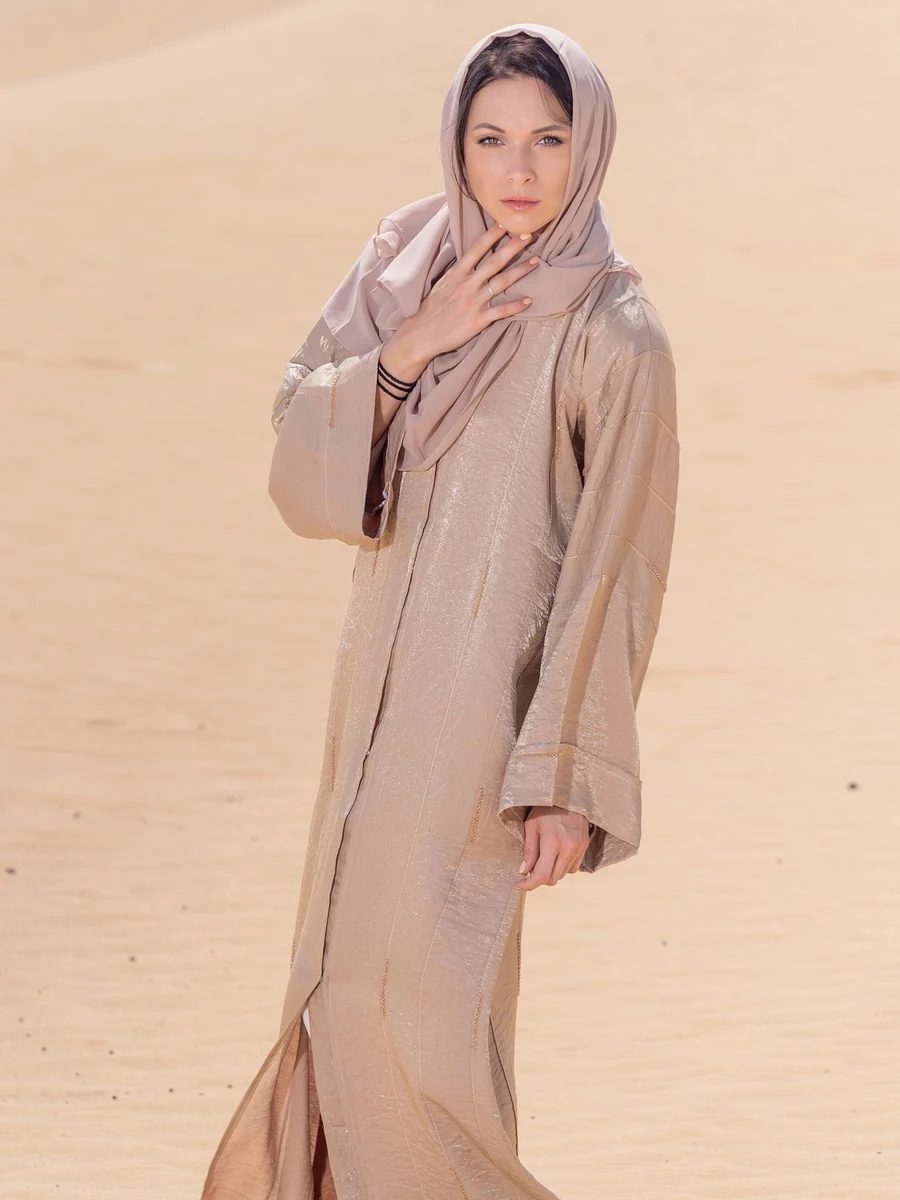
Abayas sort first by how they open, then by the shape of the sleeve and body. The main cuts are open, closed, kimono, butterfly (also sold as batwing or farasha), umbrella, coat and bisht-style. Embroidered and luxury are not cuts. They are finishes, and any of the cuts above can carry them.
Read the full guide →What is the HS code for an abaya?
An abaya has no HS code of its own. Woven abayas are usually declared under heading 6204 (dresses) or 6211 (other garments); knitted ones move to Chapter 61. Only six digits are shared worldwide. The heading sets the rate: in the US a polyester abaya pays 16% base duty as a dress or other garment, 27.7% as a cloak.
Read the full guide →What is the difference between OEM and ODM for abayas?
ODM means a factory adapts one of its own abaya designs for you, changing the length, sleeve, neckline or fabric. OEM means the factory makes your design from your pattern or tech pack. Private label is simpler still: its existing design, your labels. Each step up adds cost, sampling and lead time, and gives you more control of the design.
Read the full guide →What are the most common mistakes when buying abayas wholesale?
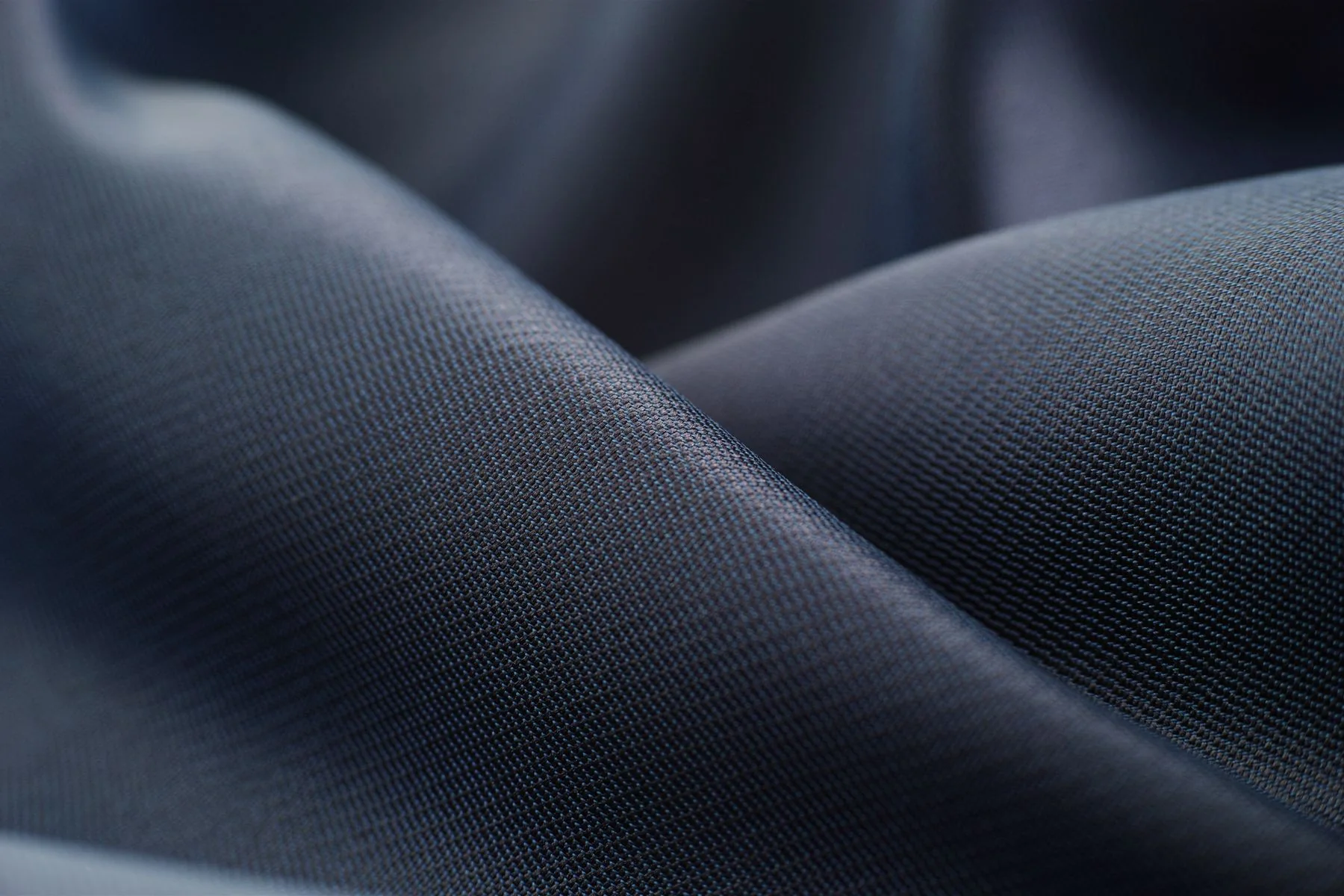
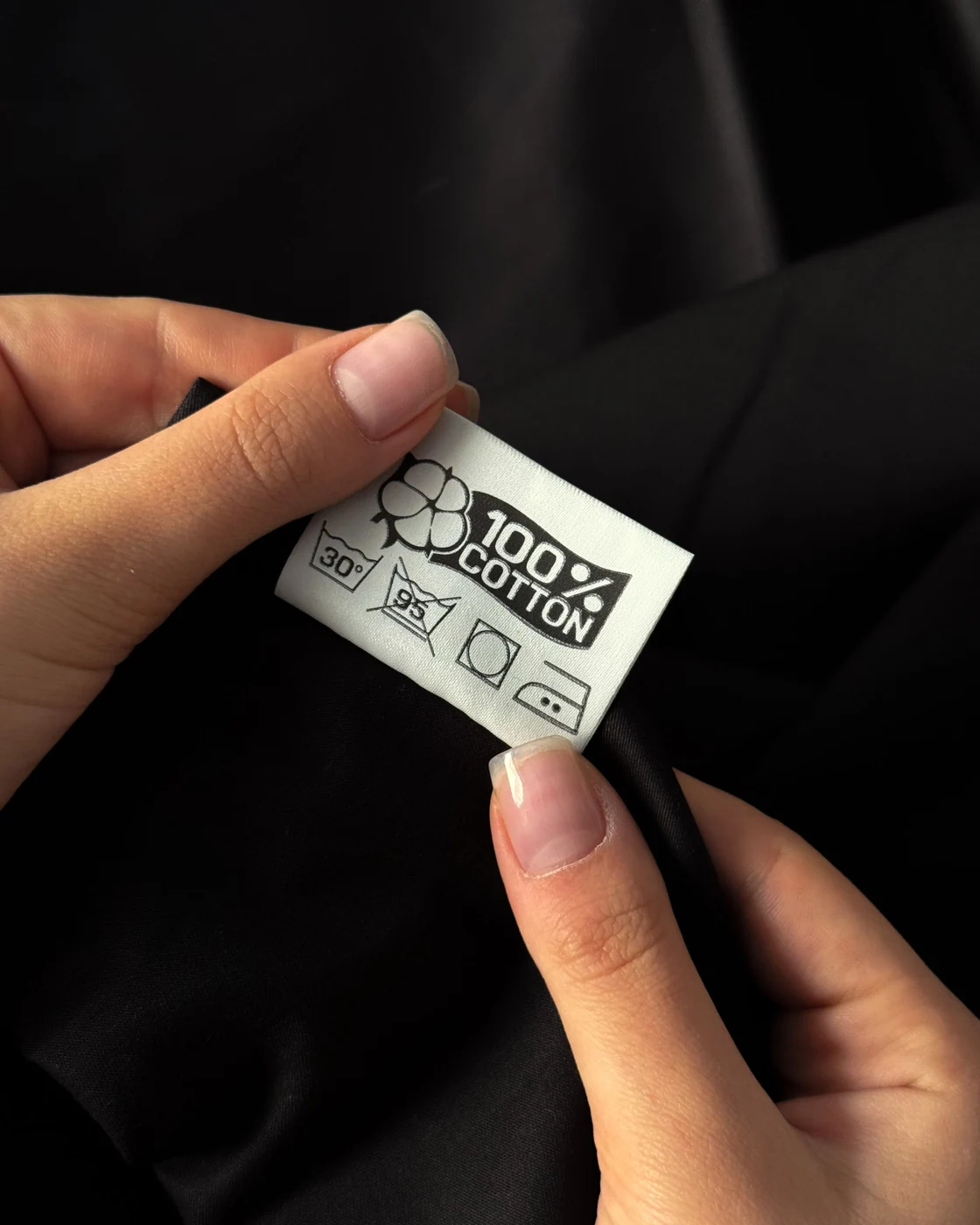
Nine mistakes cost first-time abaya buyers the most: skipping samples, comparing unit price instead of landed cost, not asking if the minimum is per style, per colour or per order, buying too many colours and sizes, ignoring fabric names, paying 100% up front, ordering late for Ramadan, the wrong size run, and not checking cartons on arrival.
Read the full guide →